Munich is a city that effortlessly manages to combine grandeur, coziness, and everyday livability. Between historic squares, expansive parks, world-famous museums, and traditional taverns, the Bavarian capital sometimes appears stately and sometimes wonderfully relaxed. Anyone visiting for the first time quickly realizes: Munich is not just made up of beer garden clichés and Oktoberfest imagery—although holding a pretzel certainly rarely hurts the atmosphere. Munich is particularly well suited for independent city exploration because many highlights are centrally located and easy to combine. In this guide, you will find the most important sights, special viewpoints, culinary spots, museums, hidden gems, and practical tips for your trip.
Top Sights in Munich
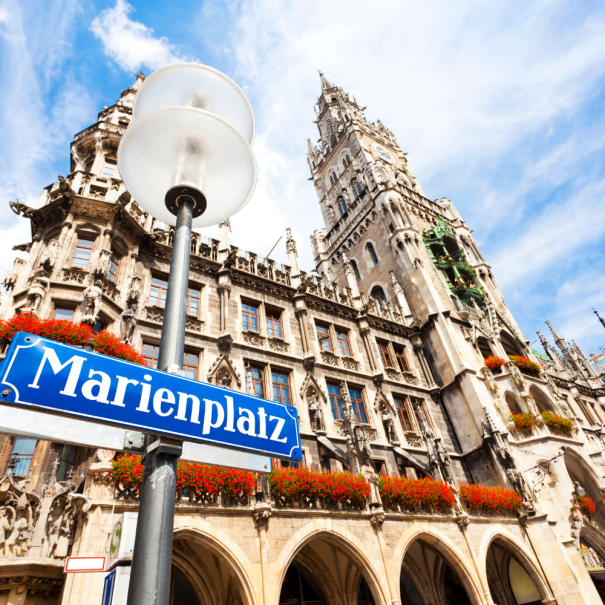
Marienplatz
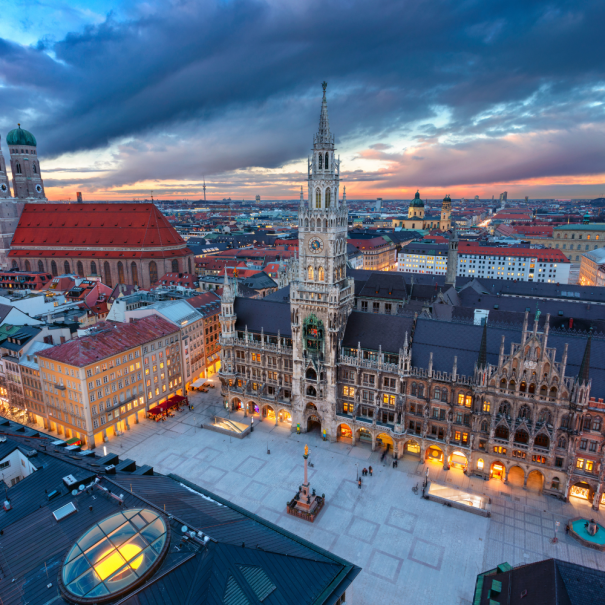
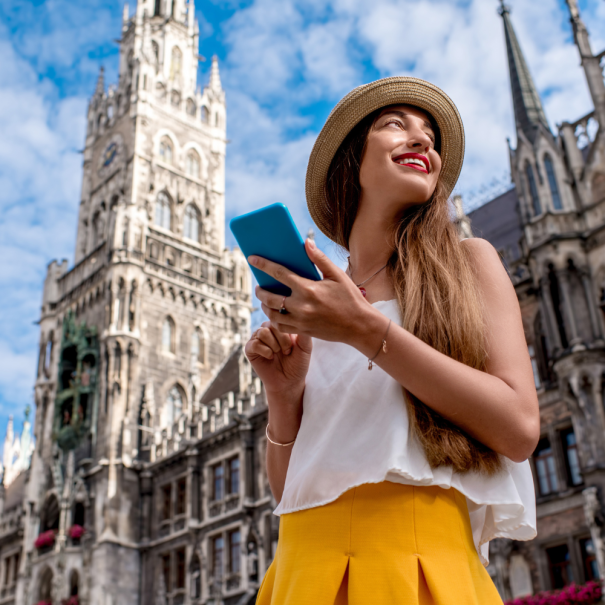
Marienplatz is the heart of Munich’s old town and usually the first place where visitors naturally experience that inner “Now I’m really in Munich” feeling. Surrounded by the New Town Hall, the Old Town Hall, and numerous historic façades, the square feels like a stage on which Munich presents its most classic side.
Especially popular is the famous Glockenspiel in the tower of the New Town Hall, which attracts visitors several times a day and tells the story of the city through moving figures. Anyone starting here has many other attractions within walking distance—a very practical beginning without the classic lost-tourist-with-a-map moment. More information can be found on the official pages about Marienplatz and the Glockenspiel.
Fun Fact: The Glockenspiel in the New Town Hall depicts, among other scenes, a knight’s tournament celebrating the wedding of Duke Wilhelm V and Renata of Lorraine, as well as the Schäffler Dance. So it is not only beautiful to watch but also a charming form of urban history lesson.
Frauenkirche
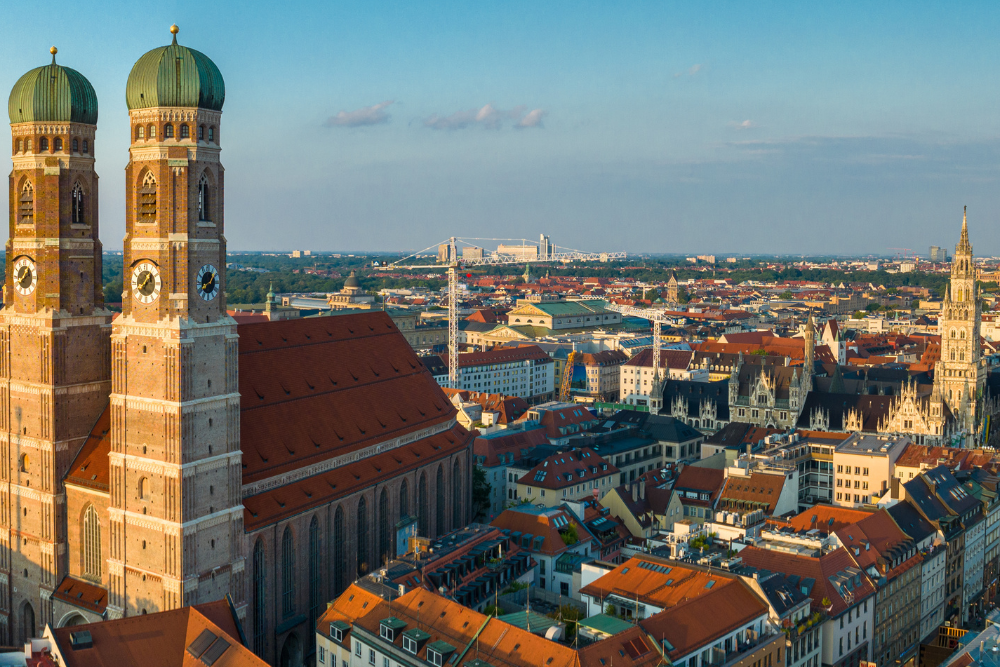
The Frauenkirche with its distinctive onion domes is one of Munich’s most recognizable landmarks and has shaped the skyline of the old town for centuries. Inside, the church appears much simpler than many other large churches in Europe, which is exactly what gives it its special charm.
It is also famous for the so-called Devil’s Footprint near the entrance, around which one of Munich’s best-known legends still revolves today. Anyone wanting to understand Munich can hardly avoid this building—if only because its towers can be spotted from what feels like every second alley in the old town. Official information about Munich’s churches can be found on the city’s overview page of churches in and around Munich.
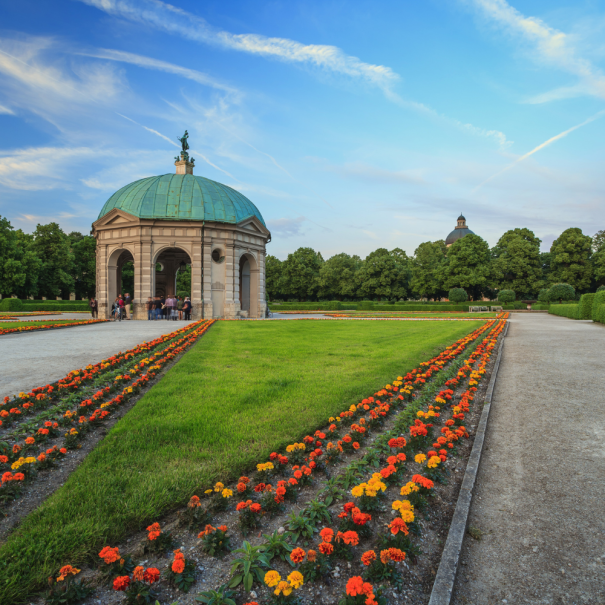
Englischer Garden
The English Garden is far more than just a green space—it is a genuine piece of Munich’s lifestyle. As one of the largest inner-city parks in the world, it offers plenty of room for walks, bike rides, beer garden breaks, and spontaneous “let’s just sit here for a moment” experiences.
Among its best-known spots are the Chinese Tower, the Monopteros, and the Eisbach wave, where surfers show off their skills right in the middle of the city. Especially in spring and summer, it becomes clear how relaxed a big city can feel when nature and urban life coexist so well. A good overview can be found on the official English Garden page.
Nymphenburger Palace
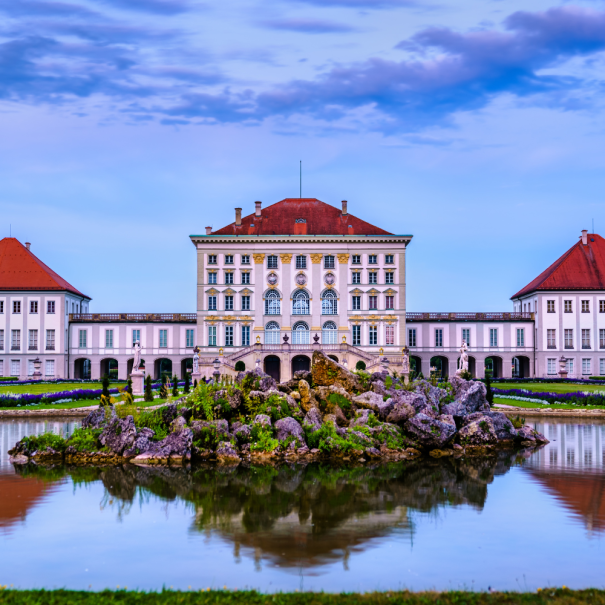
Nymphenburg Palace is one of Munich’s most impressive residences and tells much about Bavaria’s former royal splendor. The extensive complex with palace gardens, canals, and park pavilions is appealing not only for culture enthusiasts but also for anyone who enjoys strolling in beautiful surroundings.
The contrast between the magnificent interiors and the spacious, almost peaceful park landscape is particularly attractive. Anyone who had previously categorized Munich simply as a modern metropolis will quickly be reminded here that the city also has a rich royal past. More information can be found on the official Nymphenburg Palace website.
Fun Fact: The park of Nymphenburg Palace has largely retained its original layout to this day. This makes a visit not only beautiful but also a small journey through time—without needing a wig or a carriage.
Best Scenic Viewpoints
Olympiaberg
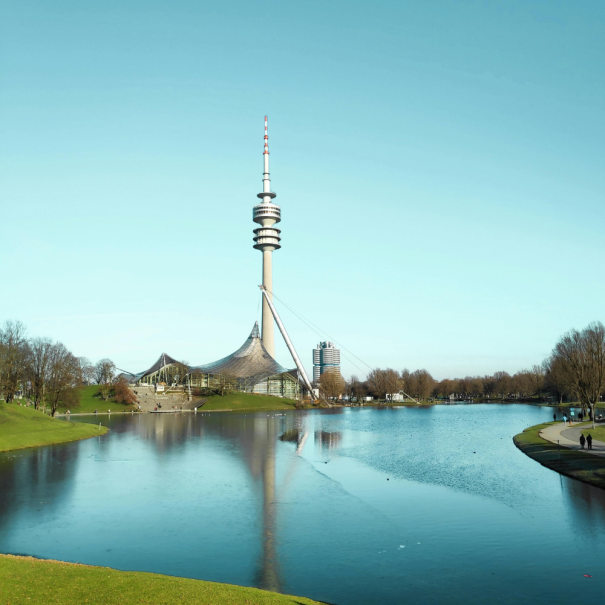
Olympiaberg is one of the most popular panoramic spots in Munich and offers wide views over the Olympic Park and large parts of the city. Unlike classic observation towers, this location feels uncomplicated and almost casually beautiful: simply walk up, sit down, and enjoy the view.
The atmosphere is especially striking on clear days and in the evening, when city, sky, and green spaces can be experienced at the same time. It is therefore a great place for anyone who loves viewpoints but prefers to avoid long queues.
Culinary Highlights For Food Lovers
Viktualienmarkt
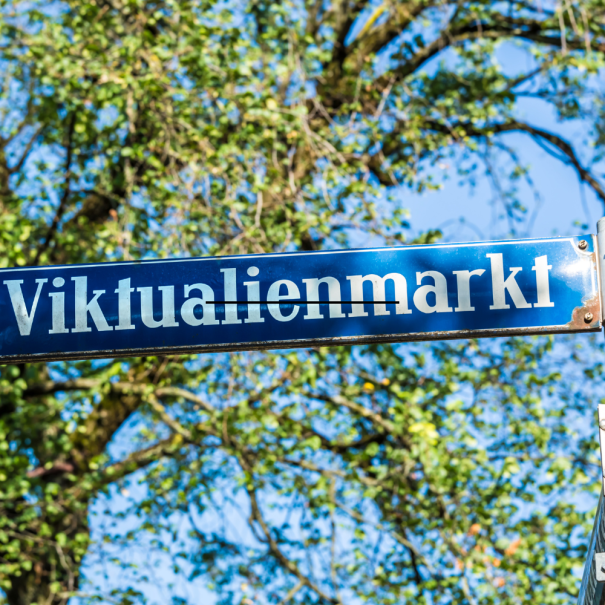
Viktualienmarkt is one of Munich’s most famous markets and a perfect place to experience the city from a culinary perspective. Between fruit stands, delicatessens, flowers, butchers, bakeries, and small food stalls, there is a lively but rarely hectic atmosphere.
Here locals meet visitors, quick snacks meet relaxed enjoyment, and tradition meets good taste. Anyone who wants not only to see Munich but also taste it is in exactly the right place here—and only leaves hungry with a great deal of self-discipline. More information can be found on the official Viktualienmarkt page.
Insider Tips & Hidden Gems
Asamkirche
From the outside, the Asam Church appears comparatively compact, but inside it reveals an almost overwhelming baroque splendor. It was originally built by the Asam brothers as a private church and today ranks among the most impressive sacred spaces in the city.
Precisely because many visitors first head to the larger and more famous landmarks, the surprise here is often all the greater. Anyone who enjoys discovering Munich through its smaller and more artistic details should not miss this place. More information can be found on the overview of the Archdiocese of Munich and Freising.
Museums for Culture and History Enthusiasts
Deutsches Museum
The Deutsches Museum is one of the most important science and technology museums in the world and a highlight for adults as well as families. Instead of dry display cases, you will find original objects, engaging presentations, and interactive exhibits that make even complex topics understandable.
From aviation and energy to robotics, the range of topics is so extensive that you could easily spend several hours—more likely several half days—here. For that reason alone, it is one of those museums where showing up with the attitude of “I’ll just have a quick look” might not work very well. More information can be found on the official Deutsches Museum website.
Fun Fact: The Deutsches Museum was founded in 1903 and, with its 66,000 square meters of exhibition space, describes itself as the largest museum for science and technology in the world. Anyone wanting to see everything in detail should probably avoid planning a tightly scheduled afternoon.
Pinakothek der Moderne
The Pinakothek der Moderne is a great destination for anyone interested in art, design, architecture, and graphic collections. The special feature is that four museums are combined under one roof, making the institution thematically unique.
The presentation feels open, modern, and pleasantly accessible, so even visitors without an art history degree will not feel lost. For culturally curious travelers, it is one of the most exciting places in Munich. More information can be found on the official website of the Pinakothek der Moderne.
Discover 70+ cities worldwide with professional audio guides – and counting! Thanks to integrated navigation, you’ll easily find your way, even without an internet connection. Whether it’s famous highlights or hidden gems – Plazes brings exciting tours and vivid stories straight to your smartphone. Completely free and no registration required. Download now and get started!


Shopping & Souvenirs
Munich is excellent for strolling and shopping because classic shopping streets, traditional addresses, and specialty food shops can be easily combined. Around Kaufingerstraße and Neuhauser Straße you will find well-known large stores, while Maximilianstraße shows the more luxurious side of the city.
For something more typical, you can visit Dallmayr or browse the Viktualienmarkt for high-quality souvenirs, regional specialties, and beautiful gourmet products.
When it comes to souvenirs, Munich is particularly suited for items that do not immediately look like something from a standard souvenir shelf: fine delicacies, coffee, mustard, beer mugs, high-quality chocolates, or regional products with a genuine connection to the city.
Small items related to Munich’s traditional tavern culture or design pieces from museum shops are also often far more charming than the hundredth refrigerator magnet. Another practical aspect is that many of these souvenirs can be purchased centrally. That leaves more time for sightseeing—or for the very human question of whether to take one more pretzel “for later.”
Top Fotospots in Munich
Eisbach Wave
The Eisbach wave is one of the most unusual photo spots in Munich because surfers right in the middle of the city always create a moment of “Wait—what?” The combination of an urban setting, flowing water, and athletic action makes the location visually exciting.
The best approach is to bring a little time and observe the dynamics instead of quickly snapping a photo. That is often when the most interesting shots appear. More information can be found on the official Eisbach wave page.
Müller'sches Volksbad
Müller’sches Volksbad is one of the most beautiful historic indoor swimming pools in Germany and also a great photo spot for anyone who loves architecture. Art Nouveau elements, high vaults, and nostalgic details make the location visually impressive and far more unusual than the classic postcard motifs of the city.
Even if you are not planning to swim, it is worth taking a look at this architectural gem. It is exactly the kind of place that makes you wonder why modern swimming pools so rarely have the same sense of drama.
Tips for Cruise Passengers
Munich is not a classic port for ocean cruises, but the city often plays a role as a pre- or post-trip destination—for example when arriving or departing via the airport or as part of Danube and river cruise connections. For this reason, it makes more sense to view Munich as a comfortable and well-connected city destination rather than a typical cruise port.
From the airport, you can reach the main station in about 40 minutes using the S-Bahn lines S1 and S8, both of which run frequently toward the city center according to airport information. Alternatively, there is the Lufthansa Express Bus connecting the airport with Munich Central Station and Munich North. Current information can be found at Munich Airport and the MVV.
If you only have limited time in Munich, it is best to focus on a compact route: Marienplatz, Frauenkirche, Viktualienmarkt, and depending on your pace perhaps Nymphenburg Palace or a museum can be easily combined.
For flexible mobility within the city, MVV transport options such as the CityTourCard or the Munich Card can be useful. A rental car is usually unnecessary in the city center and tends to invite more time searching for parking than enjoying the sights. If Munich is only a stop along the way, a well-planned central walk is usually the far more relaxed option.
Tips for Solo Travelers
Munich is a very pleasant city for solo travelers because much of it is central, well organized, and easy to reach. The old town, large parts of the center, and many attractions can easily be explored on foot or with the excellent public transportation network.
When traveling alone, this is particularly convenient: you can decide spontaneously how much you want to see without constantly solving logistical puzzles. A good first stop is the official Tourist Information office at the town hall directly on Marienplatz.
For getting around, it is worth looking at MVV ticket options, especially if you plan to visit several places in one day. The CityTourCard or Munich Card can be worthwhile depending on your itinerary, as they combine public transport with occasional discounts.
Solo travelers also benefit from the fact that places like Viktualienmarkt, museum cafés, or quieter church visits are very easygoing—no one looks twice if you simply want to observe, read, or people-watch. And honestly, in a city where even a short coffee with a view of historic façades already feels like a travel moment, being alone often feels more like a bonus than a disadvantage.
Conclusion
Munich is one of those cities that appear very classic at first glance and surprisingly diverse on the second. Between Marienplatz, Nymphenburg Palace, Frauenkirche, the Deutsches Museum, and smaller discoveries like the Asam Church, the city reveals both historical grandeur and cultural variety.
Add to that strong viewpoints, culinary addresses, and unusual photo spots that make exploring pleasantly varied.
Munich is particularly ideal for individual city tours because famous attractions and quieter corners can be easily combined. You can admire historic squares in the morning, stroll through a market at midday, visit a museum in the afternoon, and end the day at a viewpoint. That is quite a lot of quality within relatively short distances.
Or, in other words: Munich can be very elegant—but when it comes to travel planning, pleasantly uncomplicated.
FAQs:
1. What are the most important attractions in Munich?
The most important sights in Munich include Marienplatz, the Frauenkirche, Nymphenburg Palace, and the Deutsches Museum. They showcase the city from its historical, cultural, and architectural side.
2. How many days should you plan for Munich?
For a good first overview of Munich, two to three days are ideal to explore the main sights at a relaxed pace.
3. Which attractions in Munich are especially suitable in bad weather?
When it rains, the Deutsches Museum, the Pinakothek der Moderne, the Frauenkirche, and the Müller’sches Volksbad are particularly good options. Munich also offers many great indoor highlights even in bad weather.
4. Is Munich easy to explore on foot?
Yes, especially the old town can be explored very well on foot. For destinations that are farther away, public transportation is a convenient addition.
5. When is the best time to visit Munich?
Spring, summer, and early autumn are particularly pleasant. During this time, parks, markets, and viewpoints can be enjoyed at their best.