Miami is a city that makes it pretty clear from the very first walk that it has no interest in mediocrity. Here, Art Deco facades meet skyscrapers, Cuban culture meets beachfront promenades, and on top of that come museums, parks, and neighborhoods that each move at their own distinct pace. Anyone who only thinks of palm trees and pools is missing the bigger picture—even though Miami still presents itself quite confidently when it comes to sunshine. For a blog about self-guided city tours, the city is ideal because well-known highlights and characterful neighborhoods can be easily combined.
Top Sights in Miami
South Beach & Art Deco Historic District
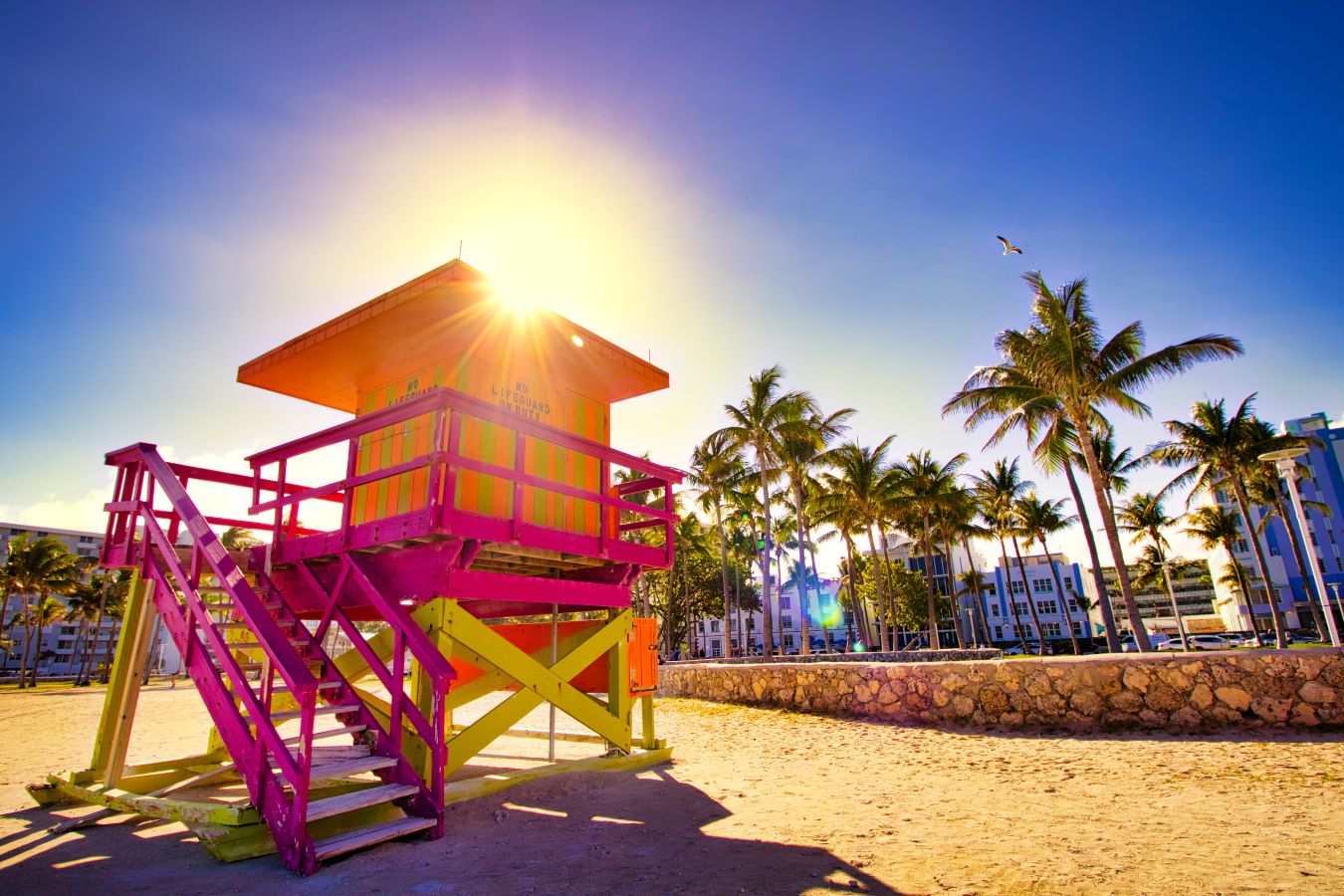
South Beach is one of those places you can hardly skip when visiting Miami. Along the Art Deco Historic District, especially around Ocean Drive between 5th and 23rd Street, you’ll find more than 800 buildings in pastel colors, neon lights, and the characteristic geometric lines of the 1930s. Especially in the early evening, the area feels almost like a movie set—just with more sunglasses and less restraint. If you like architecture, there’s plenty to see here; if you just want to stroll, it’s equally rewarding. A good starting point is the Art Deco Welcome Center, as it quickly gives you a feel for the neighborhood.
Vizcaya Museum & Gardens
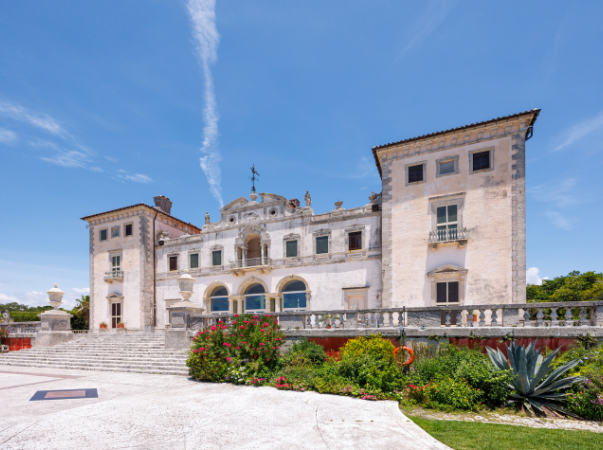
The Vizcaya Museum & Gardens is a waterfront villa completed in 1916, featuring 32 decorated rooms and 10 acres of formal gardens along Biscayne Bay. The place feels more like a European estate that accidentally ended up in South Florida and then decided to stay. Inside, historic furnishings meet Gilded Age flair; outside, terraces, sculptures, and garden axes await—impressive even for those who normally remain emotionally unmoved by rose beds. Vizcaya is particularly interesting because it shows a completely different side of Miami: quieter, older, and significantly more elegant than the beach scenery of Miami Beach.
Fun fact: Vizcaya had one of the first private telephone systems in Miami-Dade County. Even in a house that likes to resemble an Italian Renaissance villa, technology was apparently not entirely optional.
Wynwood Walls
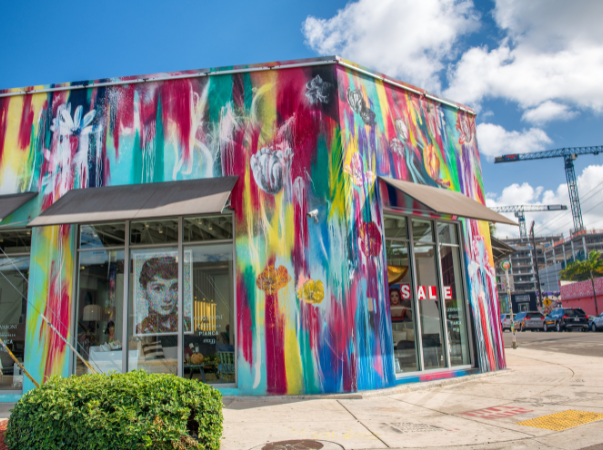
The Wynwood Walls have transformed a former warehouse district into one of the world’s most famous street art destinations. Since 2009, an open-air museum has emerged here, showcasing works by international artists and completely changing the neighborhood’s reputation. It’s no longer a hidden gem, but still worth visiting because the art constantly changes and the surrounding area is full of galleries, cafés, and additional murals. If you want to see Miami beyond beaches and skylines, this is the place to be. And yes, your phone will probably work harder here than you do.
Little Havana & Calle Ocho
For many visitors, Little Havana is the part of Miami that stays in memory the longest. Around Calle Ocho, you’ll find cigar shops, cafés, music, murals, and places like Máximo Gómez Park—known to almost everyone simply as Domino Park. The neighborhood shows how strongly Cuban history and culture have shaped Miami, without feeling like a museum. People play, debate, drink coffee, and live—often all at the same time. If you just drive through quickly, you’ll miss the real charm.
Fun Fact: In 1988, Calle Ocho made it into the Guinness Book of Records with a conga line of 119,986 people. Miami knows how to turn even a line into a show.
Pérez Art Museum Miami
The Pérez Art Museum Miami sits right on Biscayne Bay and is one of the city’s best addresses for modern and contemporary art. The building itself, with its hanging gardens and open views of the water, is already worth a visit. Inside, the museum focuses on international art of the 20th and 21st centuries, with strong ties to the Americas, the Caribbean, and the Global South. If you enjoy combining museums with great views, you’re in for a very good day here.
Phillip and Patricia Frost Museum of Science
Frost Science is a large science museum with an aquarium and planetarium in Downtown Miami. The combination works surprisingly well, as you move between space exploration, natural sciences, marine topics, and bay views without staying in one mode for too long. It’s especially great for families, but adults without children will also find plenty to see without feeling out of place. When a museum includes a planetarium and sharks in a single visit, that’s a strong program highlight.
Freedom Tower
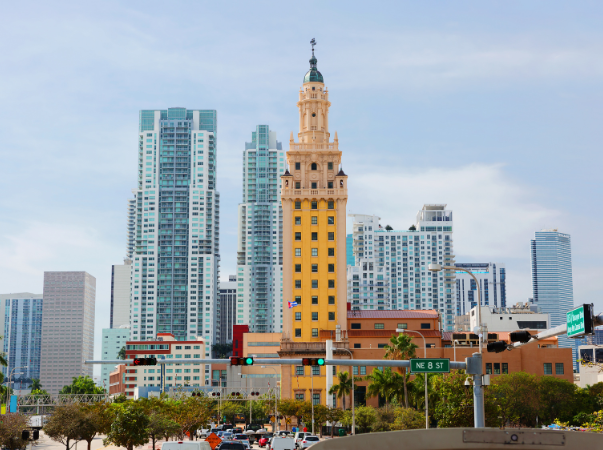
The Freedom Tower is one of the most iconic historic buildings in Downtown Miami. Built in 1925, it initially served as the headquarters of the Miami Daily News and later became a central point of arrival for hundreds of thousands of Cuban exiles entering the United States. It’s therefore much more than just a beautiful silhouette in the skyline—it is deeply connected to the history of Miami’s Cuban-American community. Anyone wanting to understand the city should stop by at least once.
Bayside Marketplace
Bayside Marketplace is touristy, loud, and precisely for that reason often surprisingly entertaining. Located right on the water, it combines shops, restaurants, and lively activity with views of the marina and the Downtown skyline. If you’re looking for a relaxed break between museum visits and city walks, this is a good place to be. Especially in the evening, the atmosphere stands out as water, lights, and music come together. It may not be the quietest place in Miami—but quiet places don’t compete for the top prize here anyway.
South Pointe Park
South Pointe Park lies at the southern tip of Miami Beach and offers open views of the beach, Downtown skyline, Fisher Island, and passing cruise ships from PortMiami. The park has paths, seating areas, beach access, and enough space to catch your breath after a day of heat and traffic. The contrast between ocean, park, and the very urban backdrop is especially appealing. If you like ships, you’ll likely stay longer than planned. If you don’t—usually after five minutes, you still will.
Metromover & Downtown Miami
Strictly speaking, the free Metromover isn’t a classic landmark, but for visitors it’s one of the most practical attractions with added value. This automated elevated train runs seven days a week through Downtown, Brickell, and Omni, connecting key locations like Bayside Marketplace, Miami Dade College, and other central stops. For a first orientation, it’s almost perfect—you get to see Miami from above without committing to a full transportation adventure. It’s public transport and a mini city tour in one, which tends to be quite popular in travel budgets.
The Best Viewpoints
Skyviews Miami at Bayside
Right next to Bayside stands Skyviews Miami, a Ferris wheel offering views over Biscayne Bay and Downtown. It’s not a hidden gem, but it’s an easy way to get a higher perspective—especially if you want to experience Miami beyond street level. During the day, the city feels clear and expansive; in the evening, lights and reflections add a different dimension. Sometimes, a great view is simply a great view—no deeper meaning required.
Rooftops in Brickell
Brickell is the district for those who prefer to see Miami with a bit more shine. Many rooftop bars and hotel terraces offer views of the Miami River, skyline, and Biscayne Bay. Especially in the early evening, this is where Miami turns into the version that looks effortlessly expensive in photos. If you prefer pairing a view with a drink rather than a queue, Brickell is a great choice.
Culinary Spots for Food Lovers
Joe's Stone Crab
Joe’s Stone Crab is one of the culinary institutions in Miami Beach. The restaurant has existed since 1913, making it much older than many other places in Miami that like to draw loud attention to themselves. The atmosphere is classic, lively, and legendary—without feeling overly formal. If you’re looking for a place with history in Miami, this is it.
Versailles Restaurant
Versailles in Little Havana is a staple for anyone wanting to experience Cuban cuisine and everyday life in the neighborhood. The restaurant has been famous for decades and is one of those places that hardly needs explanation—almost everyone in Miami already has an opinion about it. It’s lively, often crowded, and exactly for that reason exciting. A great stop for a culinary experience with local significance.
Zuma Miami
Zuma Miami is located on the waterfront in Downtown and combines an elegant setting with a long-standing strong reputation. The atmosphere is urban and stylish without becoming stiff. Especially in the evening, its riverside location really shines. If you’re looking for a slightly more upscale dinner, this is a very solid choice.
Mandolin Aegean Bistro
Mandolin Aegean Bistro in the Design District is a popular classic for those seeking a quieter, more charming dining experience in Miami. The place feels almost like a small counterpoint to the big, loud city—which is exactly why many guests love it. A great address for food lovers who value atmosphere over spectacle.
Insider Tips & Hidden Gems
Domino Park
Máximo Gómez Park, better known as Domino Park, sits right on Calle Ocho and is small enough to be easily overlooked—which would be a shame. The place tells you a lot about Little Havana. Regular players, locals, and curious visitors gather here, often accompanied by coffee, conversations, and very serious domino games. If you want to observe Miami rather than just check it off your list, stop here for a moment.
Miami Beach Botanical Garden
The Miami Beach Botanical Garden offers a quiet break in a part of the city that usually comes with more noise. Within a compact space, you’ll find tropical plants, water features, and a well-maintained garden setting that feels refreshingly different from the beach hustle. It’s perfect for a short pause between South Beach and museum visits—without having to leave half the city behind.
Española Way
Española Way in Miami Beach, with its Mediterranean-inspired buildings, small restaurants, and narrow street, feels almost like its own little microcosm. It’s part of the historic districts of Miami Beach and has far more charm than purely functional architecture ever could. Especially in the evening, the atmosphere is lively but less intense than Ocean Drive. A great place for a stroll with less neon and more ambiance.
The Kampong
The Kampong in Coconut Grove is a botanical garden located on the former estate of plant explorer David Fairchild. It’s much quieter than many classic Miami highlights—which is exactly what makes it appealing. Among tropical plants, bay views, and lush greenery, you’ll experience a version of Miami that often flies under the radar. If you need a break from the constant brightness of the palm-lined promenade, this is a pleasantly calm alternative.
Discover 70+ cities worldwide with professional audio guides – and counting! Thanks to integrated navigation, you’ll easily find your way, even without an internet connection. Whether it’s famous highlights or hidden gems – Plazes brings exciting tours and vivid stories straight to your smartphone. Completely free and no registration required. Download now and get started!


Museums for Culture & History Fans
The Bass
The Bass in Miami Beach focuses on contemporary art and rotating exhibitions. The museum is more compact than some larger institutions, which makes the visit pleasantly focused. If you enjoy modern art but don’t want to commit to a full museum marathon, this is a great choice. Its location in Miami Beach also makes it easy to combine with a walk.
Shopping & Souvenirs
Miami is great for shopping because the city offers very different retail experiences within a relatively small area. If you’re looking for a classic open-air waterfront experience, Bayside Marketplace is a natural choice. For major brands and a more urban city feel, Brickell City Centre is a great option—especially easy to combine with a Downtown day. Design, fashion, and galleries are more concentrated in the Miami Design District, where shopping and architecture naturally go hand in hand.
For souvenirs, it’s often worth looking for items that truly reflect the location. In Little Havana, you’ll find cigars, cafecito accessories, and smaller Cuban-inspired keepsakes. In Wynwood, prints, art books, and local design products are often more interesting than the hundredth standard magnet. And if you end up with just a T-shirt in your suitcase, at least make it one with some color—this is Miami, after all.
Tips for Cruise Passengers
PortMiami calls itself the “Cruise Capital of the World” and is indeed one of the most important cruise ports globally. The good news for cruise travelers is that the port is very close to Downtown. If you want to explore on your own after docking, taxis and rideshares are usually the easiest options—especially if you only have a few hours. If arriving by car, official parking is available directly at the terminals; according to Miami-Dade, there are parking garages on both the north and south sides of the port, with security monitoring and a free shuttle within parking areas on cruise days.
From Miami International Airport, there are several ways to reach PortMiami. The airport lists pre-booked cruise transfers, taxis, rideshares, and public transportation options. The MIA Mover connects to the Miami Intermodal Center, where further connections are available. For a city visit after disembarkation, heading to Downtown is often worthwhile, as you can continue flexibly using the free Metromover. You usually don’t need a rental car for Miami Beach, Downtown, or Wynwood—though it can be useful for exploring outside the city. Within the city, taxis, rideshares, or public transport typically save you time, parking stress, and a side career as a patient traffic light observer.
Tips for Solo Travelers
Miami works well for solo travelers if you divide the city into logical areas. South Beach, Downtown, Brickell, Wynwood, and Little Havana can each be planned as separate day blocks rather than squeezing everything into a single marathon. In the center, the free Metromover helps, and in Miami Beach, free trolleys run between South Beach, Mid Beach, and North Beach. Solo travelers benefit from the fact that many neighborhoods are lively during the day, making it easy to find places to take a break—from cafés to parks.
Airport connections are also convenient. Miami’s tourism site highlights the Brightline to MiamiCentral and connections via Metromover, while Brightline itself emphasizes links to Metrorail, Metrobus, and Metromover at MiamiCentral station. For on-site orientation, official tourism information from Miami & Miami Beach or the Miami Beach Visitor Center can help. As in any major city, keep valuables close and be a bit more aware of your surroundings in quieter areas at night. Miami isn’t a city that requires panic—but it’s also not one where your phone should casually hibernate on a café table.
Conclusion
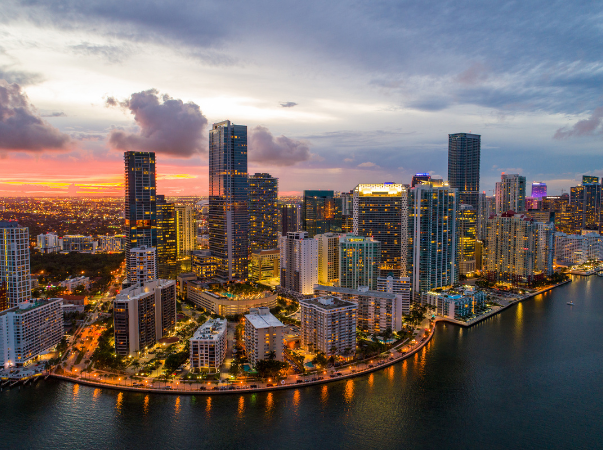
Miami offers far more than just beaches and glossy scenery. Between South Beach, Vizcaya, Wynwood, Little Havana, major museums, and the waterfront areas around Biscayne Bay, the city reveals many different sides—and that’s exactly what makes it exciting. You can admire architecture, photograph street art, experience Cuban culture, dive into museums, and still end the day by the water. That makes Miami a very strong destination for a self-guided tour, as well-known highlights and characterful neighborhoods can be easily combined.
FAQs:
1. How many days should you plan for Miami?
For the main attractions in Miami, three to four days are a good timeframe. That allows you to comfortably include South Beach, Wynwood, Little Havana, a museum, and some time by the water in your plans. If you also want to explore Coconut Grove, Vizcaya, or enjoy a relaxed beach day without time pressure, five days is the better choice.
2. When is the best time to visit Miami?
The best time to visit depends on what you’re looking for. According to the official tourism website, Miami also offers very good travel weather in winter, while prices, crowd levels, and the event calendar can vary noticeably depending on the month. For many, the period from late autumn to spring is ideal, as it’s warm but often more pleasant than the peak of summer.
3. Can you explore Miami easily without a car?
Yes, it works surprisingly well for many parts of the city. In Downtown, the Metromover runs for free, and in Miami Beach there are free trolley lines connecting key areas. For South Beach, Downtown, Brickell, Wynwood, or Little Havana, you often don’t need a rental car—as long as you plan your daily routes sensibly.
4. Which attractions are suitable for bad weather or extreme heat?
Then museums like the Pérez Art Museum Miami or the Frost Museum of Science are especially good choices. Both are among the city’s stronger indoor attractions, and Frost Science in particular, with its aquarium and planetarium, is a great place to spend several hours. In very hot weather, that is often the smarter decision than taking a midday walk across sun-heated asphalt.