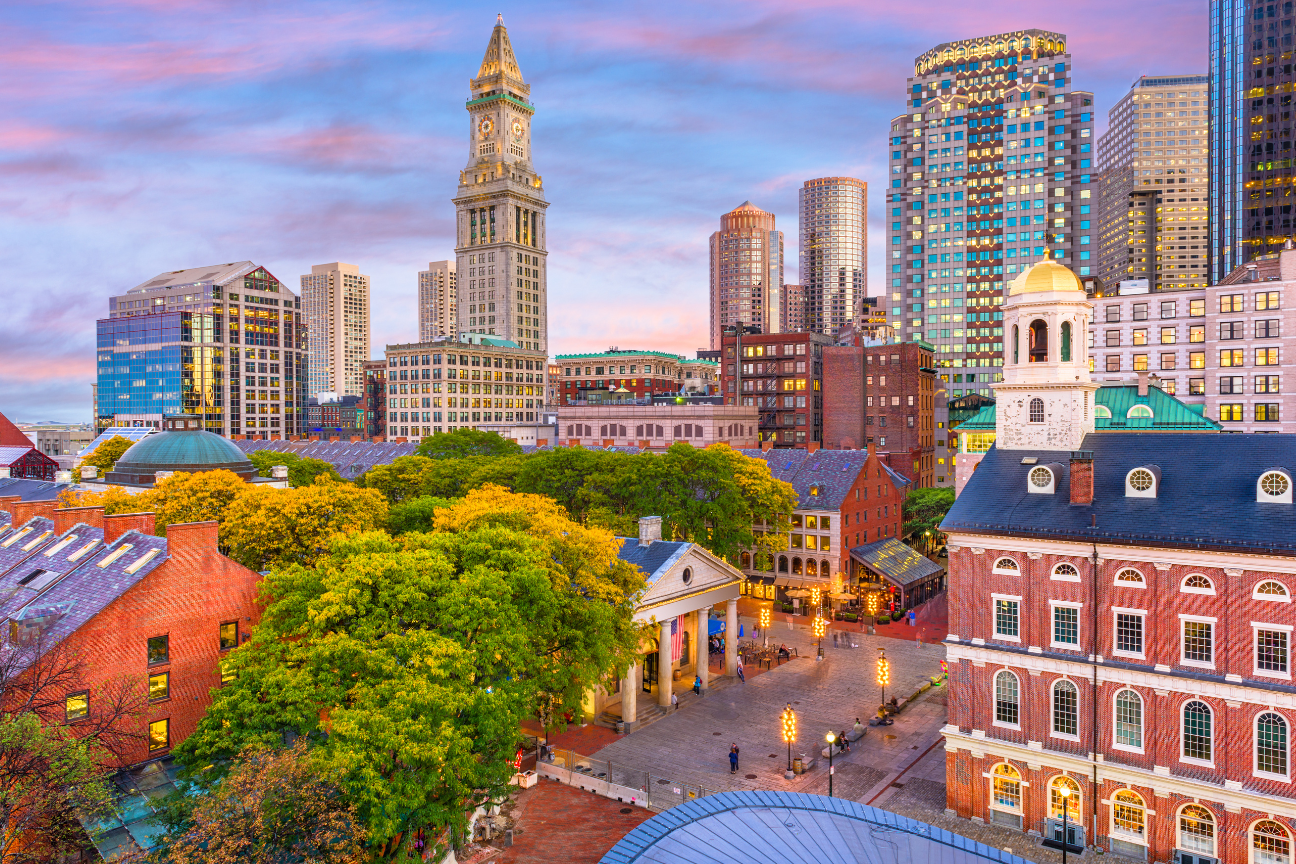
Boston is one of the oldest cities in the United States – and one of the most fascinating. Cobblestone streets meet skyscrapers, revolution meets the Red Sox, Ivy League spirit meets a fresh harbor breeze. This is where American independence began, and where many visitors first fall in love with New England. Whether history, culture, cuisine, or waterfront views: Boston masters the balance between deep-rooted tradition and modern big-city life with surprising ease – and yes, with a very distinctive sense of humor.
Top Attractions in Boston
Freedom Trail
The Freedom Trail is the perfect introduction to Boston – both geographically and historically. The approximately four-kilometer route connects 16 significant historical sites, including churches, meeting houses, cemeteries, and former homes of key figures of the American Revolution. Visitors simply follow a red line embedded in the ground that winds through Downtown, the North End, and Charlestown. Particularly convenient: the trail can be explored in full or in individual sections, with breaks at any time. This makes history feel natural and accessible rather than dry, seamlessly becoming part of a city walk.
Fun Fact: The Freedom Trail was introduced in 1951 after a journalist suggested making Boston’s history visible on the streets. The red line has become so iconic that many visitors trust it more than any navigation app.

Boston Common & Public Garden
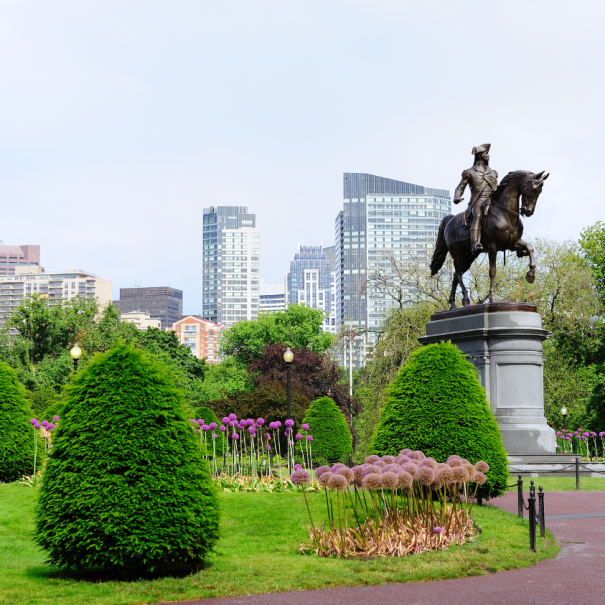
Boston Common is the oldest public park in the United States and has been a central gathering place for centuries. In the past, it served as grazing land, a meeting place, and even an execution site – today, it is a green retreat in the heart of Downtown. Directly adjacent is the Public Garden, which delights visitors with elaborately designed flowerbeds, manicured paths, and a romantic suspension bridge. The Swan Boats, gliding across the small lake since the 19th century, are particularly famous. Together, both parks form a green oasis that reveals a unique charm in every season.
Faneuil Hall & Quincy Market
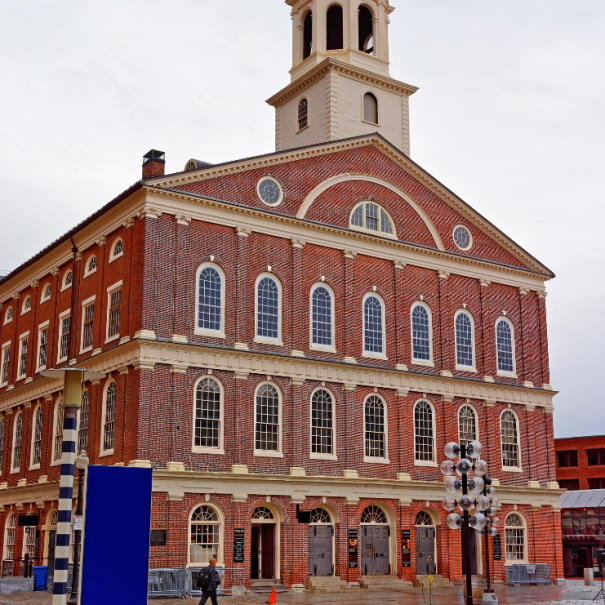
Faneuil Hall once functioned as a marketplace, meeting hall, and political center. Today, it is part of a lively complex of historic buildings, market halls, and public squares. In the neighboring Quincy Market, numerous food stalls line up, offering everything from classic New England specialties to international cuisine. Street performers and musicians add to the vibrant atmosphere. Despite its popularity with tourists, the area has retained its historical character.
Paul Revere House
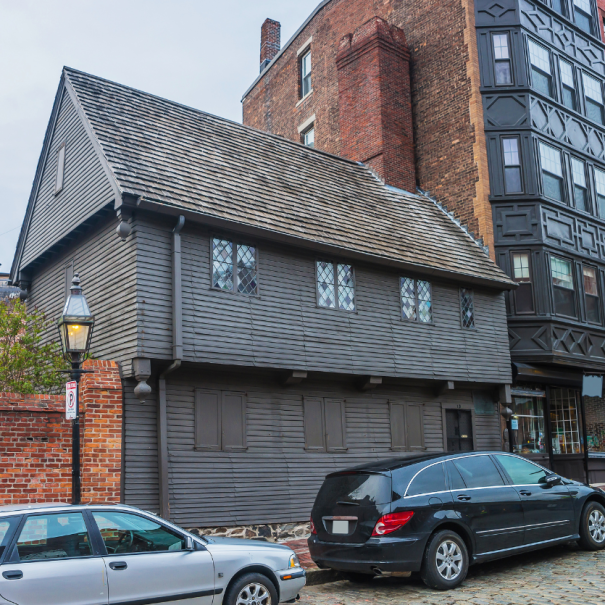
The Paul Revere House is the oldest surviving residential building in downtown Boston and offers an authentic glimpse into life in the 18th century. Paul Revere was a silversmith and patriot who became nationally famous for his midnight ride in 1775. The house itself is deliberately simple, showing how modestly many historical figures actually lived. Original furniture and exhibits provide a realistic impression of the era. A visit perfectly complements the Freedom Trail.
Old North Church
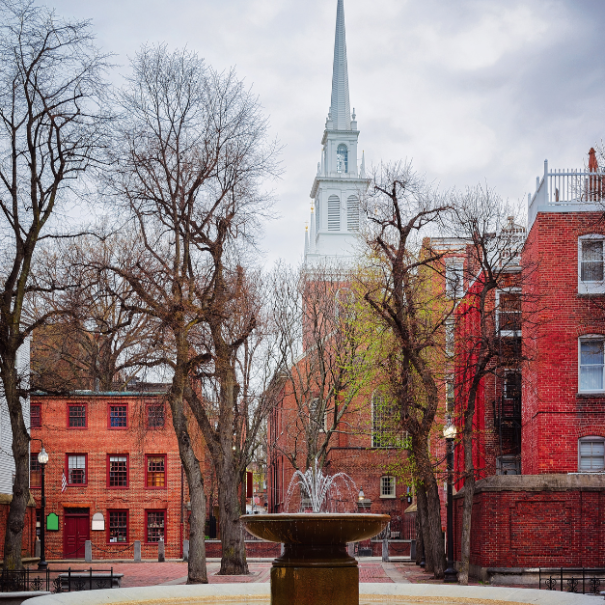
This church is inseparably linked to the American Revolution. From its tower, the famous lanterns were once hung to warn of the advance of British troops. The church dates back to the early 18th century and impresses with its simple yet elegant architecture. Services are still held here today, lending the site a special sense of authenticity. The adjacent churchyard invites visitors to take a short stroll.
Best Scenic Viewpoints
Skywalk Observatory (Prudential Center)
From up here, Boston quite literally lies at your feet. The Skywalk Observatory at the Prudential Center offers one of the most comprehensive views of the city. From the enclosed observation deck, visibility extends far beyond the city limits on clear days. Interactive displays explain neighborhoods and landmarks, which is especially helpful for first-time visitors. Thanks to its central location, the visit can easily be combined with a stroll through Back Bay. Sunset is particularly popular, when the city slowly lights up.
View Boston (One Dalton / Back Bay)
A modern alternative with a stylish concept: View Boston combines panoramic views, technology, and gastronomy. In addition to classic observation areas, digital installations explain the city from various perspectives. The rooftop terrace offers unobstructed views over Downtown and the Charles River. The contemporary design feels less touristy and more like an urban experience platform. Ideal for visitors who want to see Boston from a fresh perspective.
Bunker Hill Monument
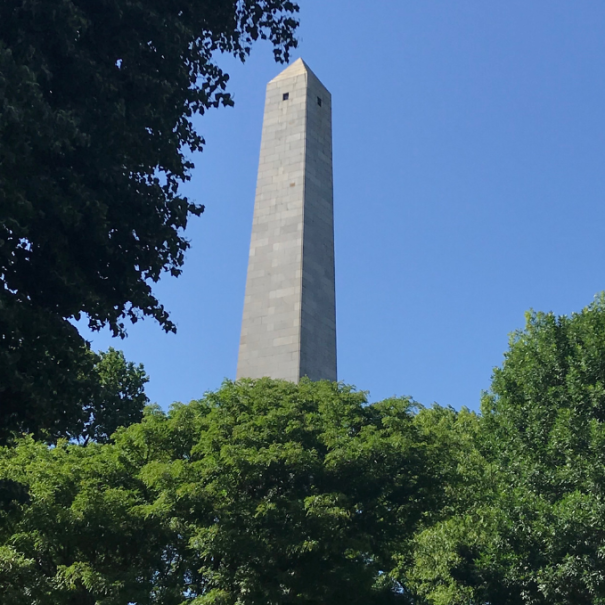
The Bunker Hill Monument commemorates one of the first major battles of the American Revolutionary War. The obelisk rises more than 67 meters high and can be climbed via a narrow spiral staircase. The ascent is demanding but rewarded with impressive views of Boston and the harbor. The surrounding park invites visitors to linger and offers additional information panels about the site’s history.
Culinary Highlights For Food Lovers
Union Oyster House
The oldest continuously operating restaurant in the United States is a true institution. Since the early 19th century, classic seafood dishes such as oysters and clam chowder have been served here. Wood-paneled rooms and low ceilings create an authentic New England atmosphere. Historical figures like John F. Kennedy were regular guests. A visit is less a restaurant experience and more a small journey through time.

Neptune Oyster
Neptune Oyster is a small, often crowded restaurant in the North End, renowned for its high-quality seafood. Its lobster rolls in particular have earned the restaurant an excellent reputation. The atmosphere is relaxed, the service personal, and the quality consistently high. Waiting times are common and almost part of the concept. Those who bring patience are rewarded.
Legal Sea Foods (Harbor Location)
Legal Sea Foods is a Boston-founded restaurant chain with a strong focus on quality and sustainability. The harbor location provides a maritime atmosphere and beautiful water views. Classic fish dishes are served, freshly and reliably prepared. For many visitors, this is their first introduction to Boston’s seafood tradition. A safe choice without surprises – in the best possible sense.
Insider Tips & Hidden Gems
Isabella Stewart Gardner Museum (Courtyard)
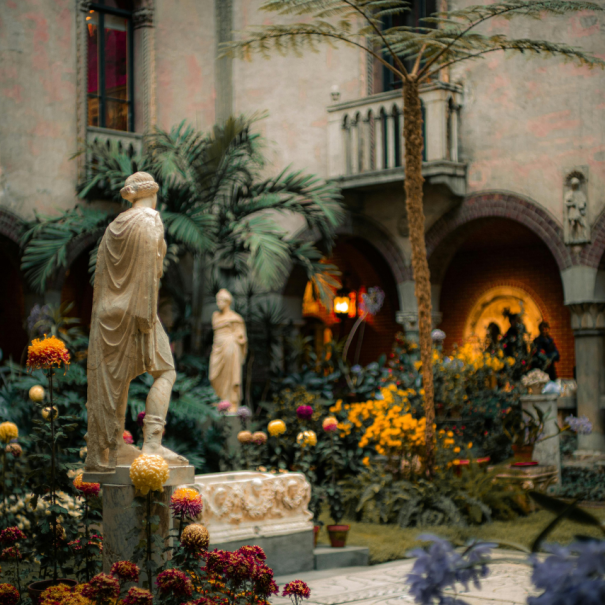
The Isabella Stewart Gardner Museum impresses with its architecture alone, but the courtyard is its true centerpiece. Planted year-round, it resembles an Italian Renaissance palace. Despite its central location, the atmosphere here is calm and almost meditative. Many visitors linger longer than planned. An ideal place to enjoy art and architecture in a relaxed setting.
Fun Fact: The museum was the scene of one of the largest unsolved art thefts in history – in 1990, works worth hundreds of millions of dollars disappeared. The empty frames are still displayed today.
Beacon Hill
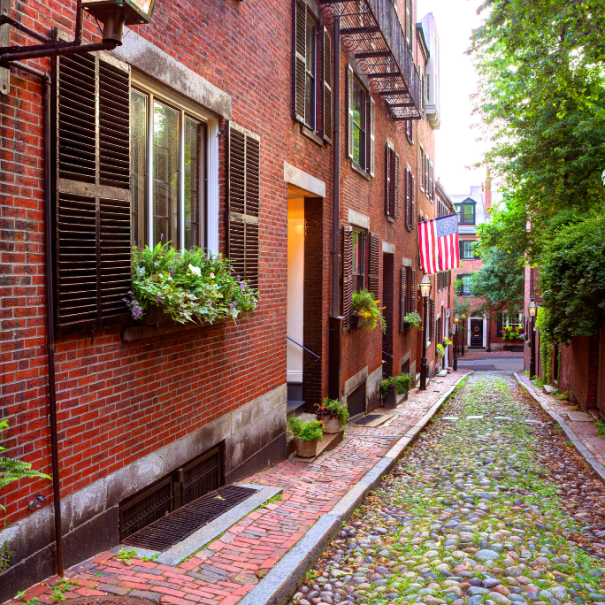
Cobblestone streets, gas lanterns, and brick facades – Beacon Hill feels like a movie set. Acorn Street is particularly famous and often cited as one of the most photogenic streets in the United States. Away from the main routes, small squares and historic details await discovery. A walk through Beacon Hill feels like stepping back in time.
Castle Island
Castle Island lies slightly outside the city center but is easily accessible. The former fortification, Fort Independence, is one of the oldest continuously used military installations in the country. Today, the area is a popular recreational space with walking paths and harbor views. On sunny days, many locals come here. Ideal for a quiet break away from the classic tourist routes.
Museums for Culture and History Enthusiasts
Museum of Fine Arts (MFA)
One of the largest art museums in the United States, featuring works from around the world. The collection spans nearly all eras and regions. Visitors will find both famous masterpieces and lesser-known but equally fascinating exhibits. The spacious galleries and clear layout make exploration easy. Perfect for an extended museum visit.
Boston Tea Party Ships & Museum
This museum combines history with interactive storytelling. Visitors actively participate in a reenactment of the Boston Tea Party while learning about its background and significance. Authentic replica ships and exhibits complete the experience. The blend of entertainment and education makes history tangible. Especially suitable for those who usually avoid museums.
Harvard Art Museums
Located in Cambridge but closely connected to Boston, the Harvard Art Museums unite three museums under one roof. The collection ranges from ancient art to modern works. The light-filled building is architecturally impressive. A visit pairs perfectly with a walk across the Harvard campus.

Discover 70+ cities worldwide with professional audio guides – and counting! Thanks to integrated navigation, you’ll easily find your way, even without an internet connection. Whether it’s famous highlights or hidden gems – Plazes brings exciting tours and vivid stories straight to your smartphone. Completely free and no registration required. Download now and get started!


Shopping & Souvenirs
Boston offers diverse shopping opportunities ranging from upscale to alternative, always reflecting the city’s character. Newbury Street is one of the most famous shopping streets, combining international brands with historic brick buildings – strolling here almost feels like sightseeing. Those who prefer independent browsing will enjoy Harvard Square, where bookstores, small concept stores, and university shops create a lively, creative atmosphere.
Along the Freedom Trail, numerous small shops sell historical souvenirs, prints, maps, and handcrafted keepsakes. Items related to the Boston Red Sox are particularly popular and represent far more than sports merchandise – they are a piece of local identity. Culinary souvenirs such as New England maple syrup or locally roasted coffee also make great gifts. Anyone looking for something beyond typical tourist shops should take their time and deliberately explore away from the big chains.
Tips for Cruise Passengers
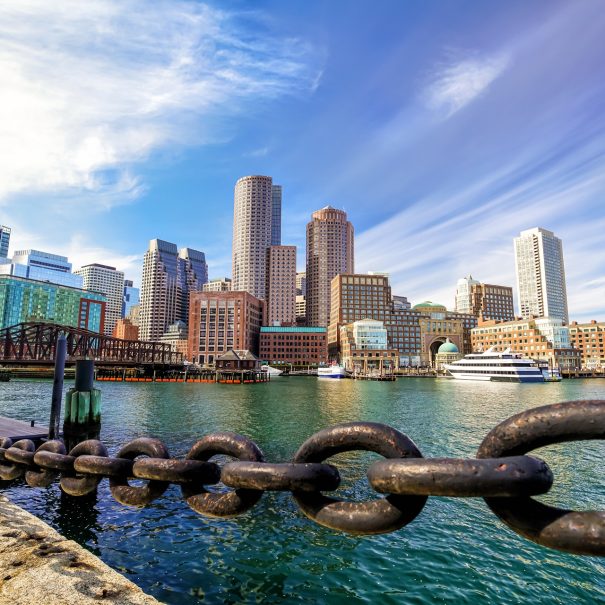
Flynn Cruiseport Boston is relatively central and one of the most easily accessible cruise ports on the U.S. East Coast. From the terminal, shuttle buses, taxis, and ride-sharing services such as Uber or Lyft are available, reaching the city center within minutes. Many cruise lines also offer organized transfers, but independent exploration is equally straightforward.
Boston is particularly pleasant for cruise passengers, as many major attractions are close together and easily reachable on foot. With just one day, visitors can comfortably combine the Freedom Trail, Boston Common, and the harbor district. Public transportation (MBTA) is clear and reliable, making even destinations like Cambridge accessible. For short stays, it is worth avoiding overly packed schedules and instead exploring individual neighborhoods more thoroughly.
Tips for Solo Travelers
Boston is considered a safe, well-organized, and very pleasant city for solo travelers. The manageable size of many neighborhoods makes orientation easy, and public transportation is simple to use – even without prior knowledge. Many attractions are close together, allowing for spontaneous routes and flexible daily planning.
Solo travelers will find many places in Boston where spending time alone feels completely natural. Cafés around universities, parks like Boston Common, and museums offer a relaxed atmosphere. The academically influenced city feels open and communicative, making conversations easy – whether in bookstores, galleries, or on guided tours. Those traveling alone often experience Boston particularly intensely, as the city offers plenty of space for personal discovery.
Conclusion
Boston is a city for explorers – whether you love history, appreciate good food, or simply enjoy strolling through characterful neighborhoods. The blend of revolution, harbor city, and modern metropolis creates its unique appeal. Visitors won’t find a loud spectacle here, but substance, charm, and surprisingly much heart. A city that doesn’t shout – it tells stories.
FAQs:
1. Is Boston a good choice for a first city trip to the USA?
Yes, Boston is an excellent introduction to the United States. The city is easy to navigate, safe, and deeply shaped by history. Many attractions are located close to one another, making Boston ideal for exploring on foot. At the same time, the city offers an authentic glimpse into everyday American life without feeling as overwhelming as New York.
2. What makes the Freedom Trail so special – and how much time should you plan for it?
The Freedom Trail connects 16 historic sites from the era of the American independence movement along a route of around four kilometers. The red line on the ground leads through various neighborhoods and is easy to follow even without a guide. Plan about 2–3 hours for the walk, depending on how many stops you make.
3. Which neighborhoods showcase modern Boston beyond the classic attractions?
Neighborhoods such as the Seaport District and Cambridge (on the other side of the Charles River) represent innovation, a young and creative scene, and modern architecture. Here you will find trendy restaurants, start-ups, waterfront promenades, and a vibrant atmosphere, especially around Harvard and MIT.
4. When is the best time to visit Boston?
Autumn (September–October) is particularly popular, when the city is transformed by the famous “Indian Summer.” Spring and summer are also ideal for walks along the Charles River and through the parks. Winter can be cold and snowy, but it has its own charm – especially around Christmas.
5. Which culinary specialties should you try in Boston?
Boston is known for its seafood, especially clam chowder, lobster rolls, and fresh oysters. In the historic Quincy Market, you will find many classic dishes in one place. Those who prefer a more modern scene will discover creative American cuisine with international influences in neighborhoods like the South End or the Seaport.