Rostock is a city that brings together Hanseatic history, Brick Gothic architecture, maritime flair, and a pleasantly down-to-earth Baltic casualness with surprising ease. Between imposing churches, historic squares, a lively city harbor, and the seaside resort of Warnemünde, this Hanseatic city reveals many different sides without ever seeming overly polished—more as if it has simply laid out its best features quite naturally. That is exactly what makes Rostock so exciting for city travelers, cruise passengers, and explorers: here, the old town, sea views, museums, and walking paths are never far apart. So anyone exploring the city does not get just one single category, but several—and all of them are quite easy to open.
Top Sights in Rostock
St. Mary’s Church
St. Mary’s Church is one of Rostock’s most important historic sights and one of the most impressive examples of North German Brick Gothic architecture in the city. From the outside alone, the building looks imposing, but it is inside that it really unfolds its full impact—with its vast hall church, Baroque high altar, large organ façade, and an atmosphere that feels both solemn and pleasantly understated. It is especially famous for its astronomical clock, which still works today with its original mechanism and counts among Rostock’s greatest treasures. Anyone who wants to understand Rostock should start here, because hardly any other place combines the city’s history, art, and science so vividly.
Fun fact: The astronomical clock in St. Mary’s Church dates back to 1472 and still operates with its original mechanism today—that is not only impressive, but also genuinely rare in this form. So if you normally think of old clocks as merely decorative ticking, this one will very kindly prove you wrong.
Neuer Markt and Town Hall
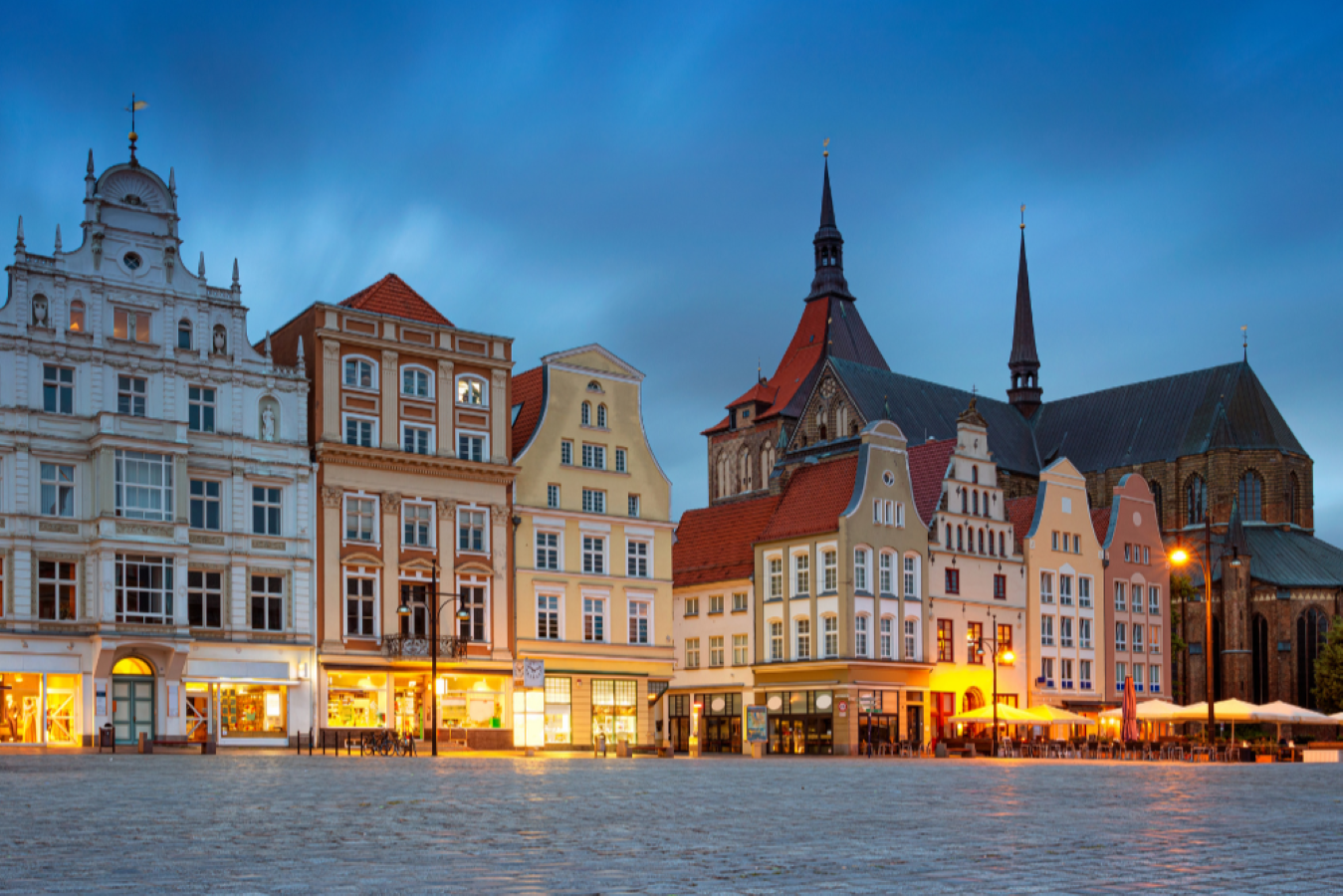
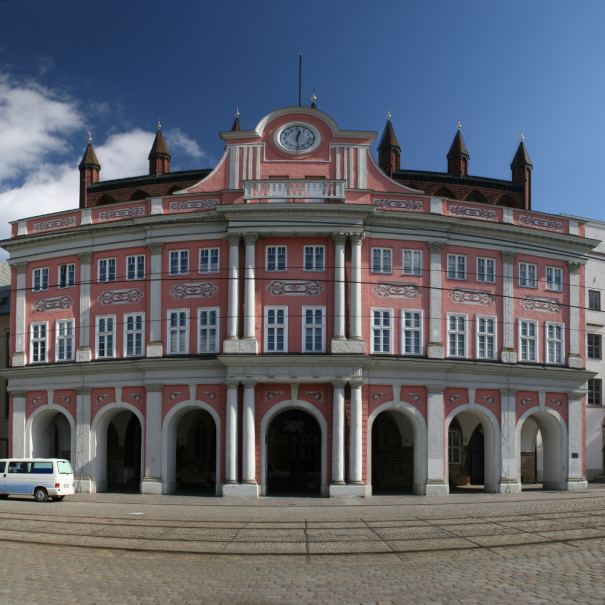
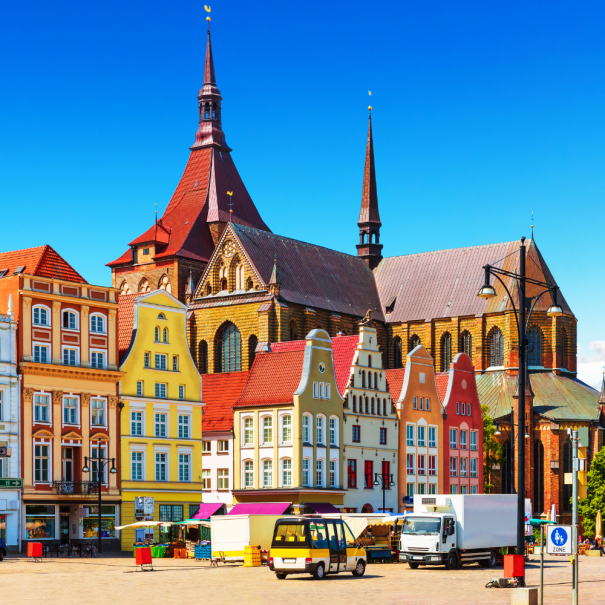
Neuer Markt is the historic heart of Rostock and exactly the right place to get a feel for the city. Here, colorful gabled houses, the striking town hall, and the typical Hanseatic cityscape come together without the square seeming overly polished or museum-like. Instead, Neuer Markt thrives on its mix of history, everyday life, and architecture—in other words, exactly the combination that makes city visits enjoyable. With its Baroque show façade and Gothic elements behind it, the town hall also beautifully illustrates how many layers of time Rostock brings together in its center.
Kröpeliner Gate
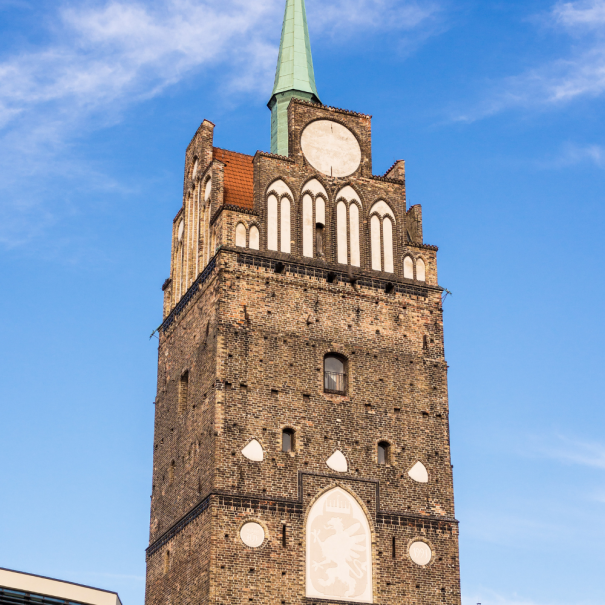
Kröpeliner Gate is one of Rostock’s best-known city gates and a landmark you will almost automatically pass sooner or later. With its height, brick façade, and distinctive shape, it recalls the time when Rostock was defined by mighty fortifications. Today, the gate feels less defensive than photogenic, but that is exactly where its charm lies: it stands in the middle of urban life and connects past and present without any grand pathos. The lively city center begins all around it—perfect for anyone who likes to combine sightseeing and strolling through town without long detours.
Kröpeliner Street
Kröpeliner Street is Rostock’s most important shopping and promenade street, but it is far more than just a place for browsing stores. Between historic façades, small shops, cafés, and passages, the city center shows its lively side here. Anyone who simply wants to drift through Rostock—without a strict master plan and with a realistic chance of coffee, a cinnamon roll, or spontaneous window-shopping love—is exactly right here. What is especially nice is that Hanseatic history and modern city life do not disturb each other on this street, but coexist quite comfortably side by side.
Rostock City Harbor
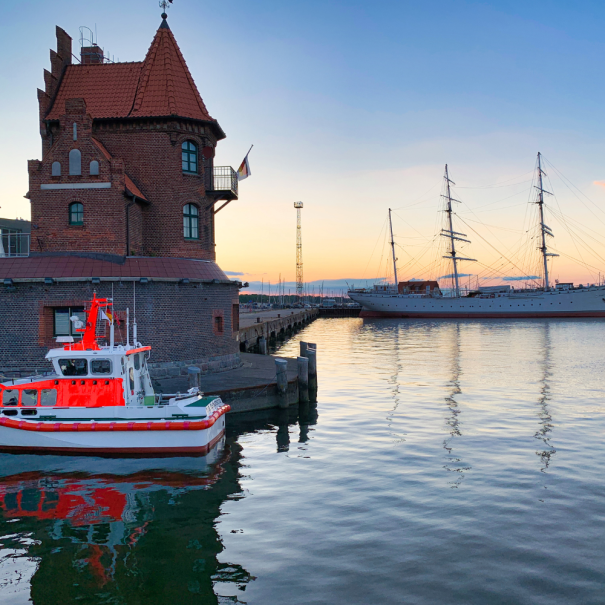
The city harbor is one of those places in Rostock where you can feel the city’s maritime spirit especially well. Along the Warnow River, a promenade, ships, restaurants, bars, and walking paths line up side by side, making the area wonderful to explore both during the day and in the evening. Here, you can take a relaxed stroll along the water, let your gaze wander across the river, and experience Rostock from its easygoing, open side. Especially when the sun is low and the lights are reflected in the water, you quickly understand why people in harbor cities often linger a little longer than planned.
Warnemünde with the Alter Strom
Warnemünde may be a district of Rostock, but with its beach, the Alter Strom, and its fishermen’s houses, it almost feels like its own little holiday chapter. Along the Alter Strom, boats, cafés, small shops, and restaurants sit close together, creating that classic coastal feeling the moment you start walking. It is one of those places where you originally only meant to have a quick look and then somehow stay much longer—usually with a bag of pastries, a fish sandwich, or at least three extra photos on your phone. Anyone visiting Rostock should therefore not see Warnemünde as a pretty side setting, but as a fixed part of the experience.
Warnemünde Lighthouse
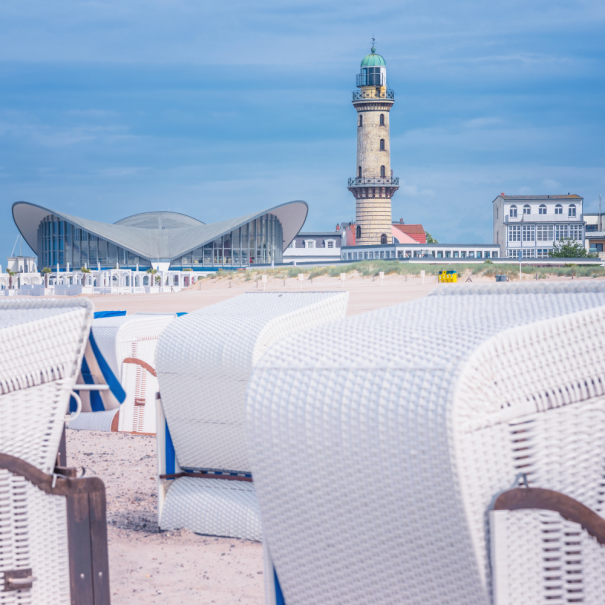
The lighthouse in Warnemünde is one of the best-known landmarks on the Baltic Sea and one of those classics you should not skip anyway. Even from below, the white tower is a striking eye-catcher right on the promenade; from above, a broad view opens up over the beach, the Baltic Sea, the harbor entrance, and the rooftops of Warnemünde. Especially in clear weather, the panorama is excellent—and yes, up there the wind usually takes over your hairstyle free of charge. Anyone who wants not only to experience Warnemünde but also to understand it from above is in exactly the right place here.
Teepott Warnemünde
Right next to the lighthouse stands the Teepott, one of the most architecturally distinctive buildings in the region. The round structure with its curved hypar shell roof looks futuristic, yet at the same time surprisingly natural by the beach—almost as if the coast had at some point decided to bring along a little design history as well. Inside, you will find dining and places to relax; outside, the building’s shape ensures that practically everyone stops for at least a moment. If you like architecture, you should take a closer look here; if you do not usually find it that exciting, you probably should as well.
Fun fact: The current Teepott dates from 1967/68 and is closely linked to Ulrich Müther’s famous shell construction method. That makes it not just a beach building, but also a small piece of GDR architectural history with a remarkably high recognition value.
University Square and the Main Building of the University of Rostock
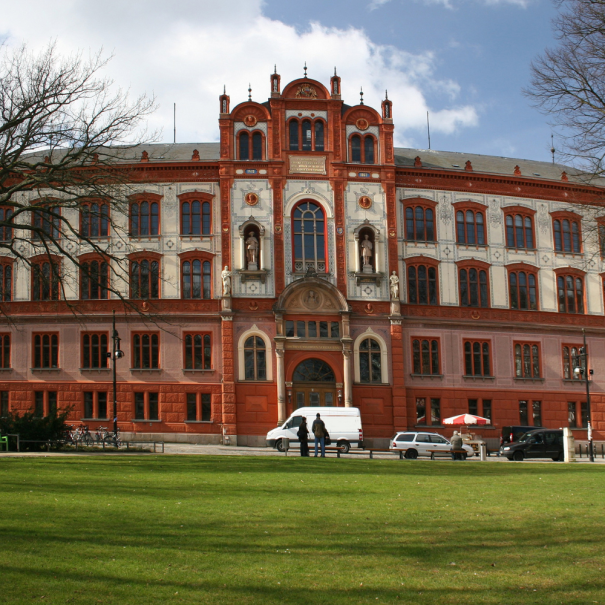
University Square introduces another side of Rostock: that of a traditional university city. The University of Rostock was founded as early as 1419, making it one of the oldest universities in the Baltic region. Around the square, the main building, green spaces, and central location create a pleasantly open atmosphere that provides a nice change of pace, especially during a longer city walk. Anyone who wants to experience Rostock not only as a harbor city but also as a place of education and history should definitely include this area.
Rostock Zoo with the Darwineum and Polarium
Rostock Zoo is far more than a classic zoo and counts among the city’s stronger family-friendly attractions. The Darwineum in particular combines animal observation, science, and environmental education in a modern way, while the Polarium focuses on the habitats of the North and South Poles. That makes the zoo suitable not only for families with children, but also for adults who like museums but would rather meet an orangutan than a display case from time to time. If you enjoy adding something other than churches, squares, and façades to your city trips, this is a very good addition.
The Best Viewpoints
St. Peter’s Church
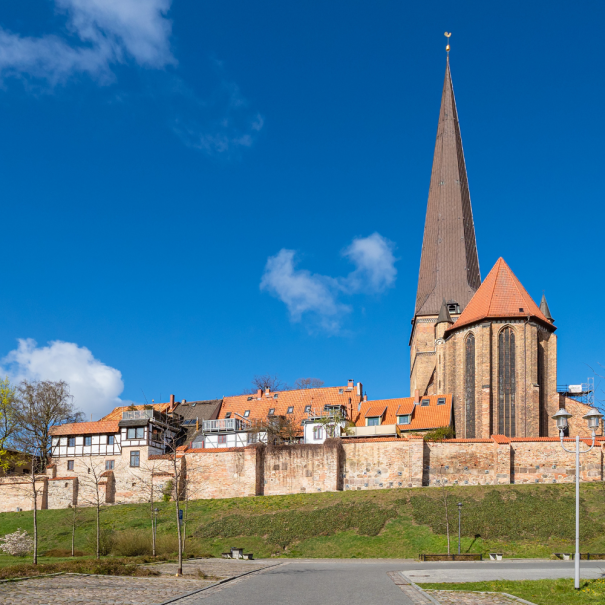
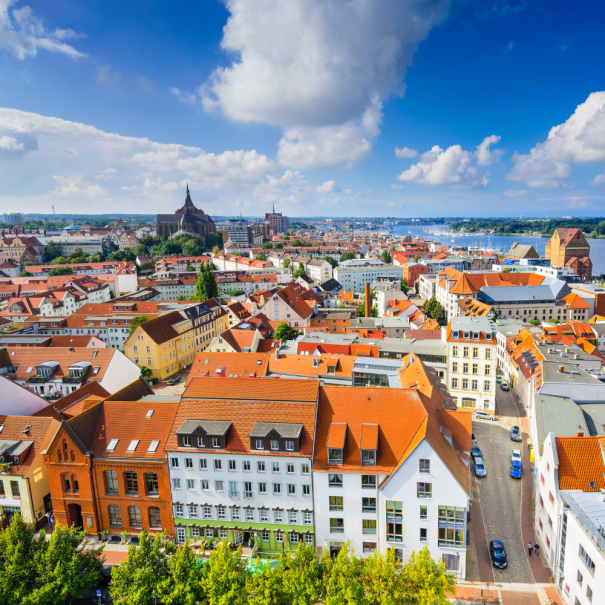
St. Peter’s Church is one of the best viewpoints in Rostock because from here you get a wonderful view over the old town, the city harbor, and the Warnow. Especially practical: the viewing platform can be reached not only by steps, but also by elevator—which can be a very welcome deciding factor after a long day of sightseeing. From above, Rostock reveals all its diversity: historic rooftops, water, church towers, and the clear lines of the city’s structure. Anyone wanting to take photos or simply get oriented is exactly right here.
City Harbor at Evening Light
Not every viewpoint needs lots of steps or a ticket—sometimes the right place at the right time is enough. The city harbor offers especially wide views over the Warnow, the skyline, and the illuminated waterfront in the late afternoon and evening. Here, it is less about maximum height and more about atmosphere, openness, and the calming effect of the water. Anyone who prefers to experience Rostock with a walk instead of staircases will find a very accessible viewing moment here.
Culinary Highlights For Food Lovers
Borwin – Harbor Restaurant
Borwin – Harbor Restaurant is located directly at the city harbor and scores points for its waterside location alone. Anyone wanting to experience Rostock culinary-style with a maritime view is sitting in exactly the right place here and can order the harbor flair right along with the meal—at no extra charge. The atmosphere is pleasantly modern but not stiff, making the restaurant suitable both for a relaxed lunch and for a nicer evening out. Especially for visitors who want to explore the city first and then pick up their fork later with a view of the Warnow, this is a fitting address.
Teepott Restaurant Warnemünde
At Teepott Restaurant, you can combine dining with one of Warnemünde’s best-known backdrops. Its location right by the beach and the view toward the western mole ensure that it is not just the plate that impresses here, but also everything around it. The contrast between the striking building and the relaxed coastal atmosphere is particularly appealing—architecturally exciting, yet never pretentious. For anyone looking for a culinary stop with a sea view, this is an obvious and worthwhile option.
Herbarium
Herbarium in Rostock is a good address for anyone who likes a stylish ambience without it immediately sounding like white tablecloths and cautious whispering. For many, the restaurant is an upscale but accessible choice in the city center and is especially suitable when the evening is meant to feel a little more special. The atmosphere is urban, modern, and pleasantly calm—ideal if, after a day full of impressions, you do not want to negotiate with loud background music as well. Anyone looking for a culinary counterpoint to the harbor’s maritime flair will find a lovely addition here.
Insider Tips & Hidden Gems
Monastery of the Holy Cross
The Monastery of the Holy Cross is one of those places that does not loudly ask for attention, and that is exactly what makes it so appealing. This historic complex is one of the last enclosed medieval architectural ensembles in Rostock and radiates a soothing calm despite being located right in the city center. Walking through the grounds, the city suddenly feels slower, quieter, and a good deal older. Anyone who does not just want to tick Rostock off a list but truly experience it should consciously take time for this place.
Fun fact: The monastery was founded as early as 1270 and is considered the only fully preserved monastery complex in the city. In other words: while centuries elsewhere have done plenty of rebuilding, this place has preserved a remarkable amount of its historic character.
Heiligengeisthof
Heiligengeisthof is one of those places in Rostock that are easy to overlook, even though they have a great deal of atmosphere. Between historic buildings and a quieter setting, the courtyard feels almost like a small retreat away from the busier routes. Especially if you enjoy wandering through cities and do not only look for the obvious main sights, this is a worthwhile stop along the way. Places like this are often the ones you later remember with surprising fondness—perhaps precisely because they do not constantly call for attention.
IGA Park Rostock
IGA Park is ideal for anyone wanting to discover a greener side of Rostock in addition to the old town and coastal flair. This spacious parkland on the banks of the Warnow offers plenty of room for walking, breathing deeply, and observing, without requiring you to leave the city entirely. Particularly appealing is the mix of park landscape, waterside location, and special features such as the Willow Dome. Anyone who still feels like more air, calm, and openness after the classic sights will be in very good hands here.
Museums for Culture & History Fans
Rostock Cultural History Museum
The Rostock Cultural History Museum is the first address for anyone wanting to dive deeper into the city’s history. Housed in the historic Monastery of the Holy Cross, it already combines architectural and urban history in a particularly fitting way simply through its location. Its collections and exhibitions focus on art, culture, and Rostock’s development—in other words, exactly the background that often makes a city trip truly tangible. Anyone who wants to understand how Rostock became what visitors see today is in exactly the right place here.
Rostock Maritime Museum
The Maritime Museum aboard the traditional ship is not only fascinating in terms of content, but already an experience simply as a location. As Germany’s largest floating museum, it brings Rostock’s maritime history vividly to the point—and in a way that a normal museum building simply could not compete with. On the listed historic ship, the development of shipping and shipbuilding in the region becomes tangible without ever feeling dry. Anyone who takes Rostock seriously as a harbor city should definitely keep this museum on their list.
Rostock Art Museum
Rostock Art Museum is a worthwhile stop for anyone who wants to include contemporary or modern art in a city trip. It complements the city’s historic highlights with a cultural perspective in other directions, creating a pleasantly balanced mix. After churches, gabled houses, and harbor views, a change of perspective often feels refreshing—not because Rostock lacks variety, but because variety is simply the better travel companion. For culture fans, this museum is therefore an essential quiet and focused contrast.
Discover 70+ cities worldwide with professional audio guides – and counting! Thanks to integrated navigation, you’ll easily find your way, even without an internet connection. Whether it’s famous highlights or hidden gems – Plazes brings exciting tours and vivid stories straight to your smartphone. Completely free and no registration required. Download now and get started!


Shopping & Souvenirs
Rostock is not a city that relies on grand staging when it comes to shopping—and that is exactly what often makes browsing here so pleasant. On Kröpeliner Street, Breite Straße, and around the city center, you will find a good mix of well-known stores, smaller shops, cafés, and arcades. It feels less like a “shopping mission under time pressure” and more like relaxed strolling with a realistic chance of spontaneous finds.
If you are looking for souvenirs, it is worth taking a look at the Rostock Information office in the city center, which also offers souvenirs. In addition, along the Alter Strom in Warnemünde you will find various small shops with a maritime touch—from decorative gifts to typical coastal keepsakes. Anyone who prefers to buy something that does not instantly look like a classic holiday magnet will usually be happier in owner-run shops or with regionally inspired products. And yes, a pretty Baltic-themed gift is often the more elegant solution than the fifth seagull-shaped fridge magnet.
Tips for Cruise Passengers
For cruise passengers, Rostock is especially practical because cruise traffic in Warnemünde is extremely well established. The Warnemünde Cruise Center is designed for large passenger turnarounds and offers orientation systems on site for guests who want to find their way around Warnemünde, Rostock, and the surrounding area. From the terminal, you can quickly get into town, easily reach the Alter Strom, the lighthouse, and the beach on foot, and do not need to start your day with anything complicated. That is particularly pleasant when, in the morning, you are not yet ready to think your way through complex transport logic.
Anyone wanting to travel from Warnemünde to Rostock’s city center can use the well-developed public transport system. The region has an integrated network that allows you to use S-Bahn trains, regional trains, trams, buses, and ferries with one ticket. Taxis are of course also an option for individual excursions; a classic rental car is more worthwhile if you also want to head to destinations outside the city. For a compact shore excursion, however, Warnemünde and the connection to Rostock are often completely sufficient.
Helpful for planning are the official information pages of the city and the harbor, such as Rostock Information or the Warnemünde Cruise Center. There you will find current information, maps, and orientation for a day visit. If you only have a few hours, a clear decision is recommended: either maritime coastal feeling in Warnemünde or old town, churches, and city harbor in Rostock. Doing both in one day is possible, but then the timing needs to be right—otherwise the tour can quickly turn into “brisk walking” instead of relaxed discovery.
Tips for Solo Travelers
Rostock is a pleasantly uncomplicated city for solo travelers. The city center is clear enough to find your way around without long map study, yet varied enough that you do not feel after an hour as though you have already seen everything. Particularly practical is the good connection between the city center, the city harbor, and Warnemünde, allowing you to switch flexibly between city and coastal activities. So anyone traveling alone benefits here from short distances rather than constant reorganization.
A good first stop is the Rostock Information office in the city center, where you can get personal advice, orientation, and helpful information for your stay. Public transport is also a real plus, since one integrated ticket allows you to use different means of transport throughout the region. For solo travelers who like to just go with the flow, this is ideal: you do not need to plan everything down to the minute and can still get from A to B in a relaxed way.
If you are out and about alone, the city harbor, Kröpeliner Street, University Square, and Warnemünde are especially suitable for relaxed walks with enough activity but without the hectic feeling of a big city. Cafés, promenades, and public squares offer plenty of opportunities for breaks, observation, and spontaneous changes of direction. Rostock is therefore not a city where you feel “out of place” when alone—quite the opposite, in fact. You can spend a whole day here simply setting off, looking around, discovering things, and quietly asking yourself from time to time whether you need another coffee. Experience shows that the answer is often: yes.
Conclusion
Rostock is a city that combines many different facets without ever feeling overloaded. Historic churches, medieval city gates, lively squares, a relaxed city harbor, and the maritime flair of Warnemünde make this Hanseatic city a versatile destination on the Baltic Sea. It is precisely this mix that makes Rostock work for very different types of travelers—for culture fans as much as for cruise passengers, city strollers, photographers, or people who simply enjoy being near the water.
With sights such as St. Mary’s Church, Neuer Markt, Kröpeliner Gate, the city harbor, Warnemünde Lighthouse, or the Teepott, the city offers both classic highlights and places with a great deal of atmosphere. Added to that are viewpoints, museums, green retreats, and good connections between the different parts of the city. So anyone visiting Rostock gets not just a pretty Baltic postcard motif, but a city with history, character, and a remarkable amount of variety. Or to put it another way: Rostock can do more than harbor romance—although, to be fair, it does that pretty well too.
FAQs:
1. How many days should you plan for Rostock?
For a first impression, a full day is enough, especially if you focus on either the old town or Warnemünde. If you also want to visit museums, the zoo, or IGA Park, two to three days are much more relaxed.
2. What is the fastest way to get from Rostock to Warnemünde?
The connection is very straightforward: you can reach Warnemünde in about 20 minutes by S-Bahn (line S1). Alternatively, buses also run there, or you can combine the trip with a bike ride along the Warnow.
3. Can you swim well in Rostock—and where are the best beaches?
Yes, especially in nearby Warnemünde you will find one of the most beautiful sandy beaches on the Baltic Sea. The beach is wide, clean, and ideal both for relaxing and for activities such as beach volleyball or walks.
4. Which culinary specialties should you try in Rostock?
Typical for the region are fresh fish, for example fish sandwiches or fried cod, smoked fish, and other maritime dishes. In Warnemünde and at the city harbor, you will find many restaurants and snack bars serving regional cuisine.
5. Which places best show Rostock’s typical character?
The city harbor, with its historic buildings and views of the water, conveys a maritime atmosphere, while Neuer Markt and St. Mary’s Church reflect the city’s Hanseatic history. Together, they give a very good impression of Rostock.