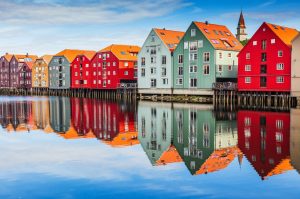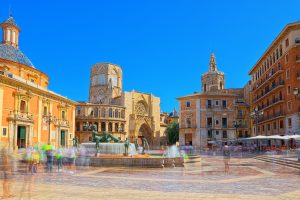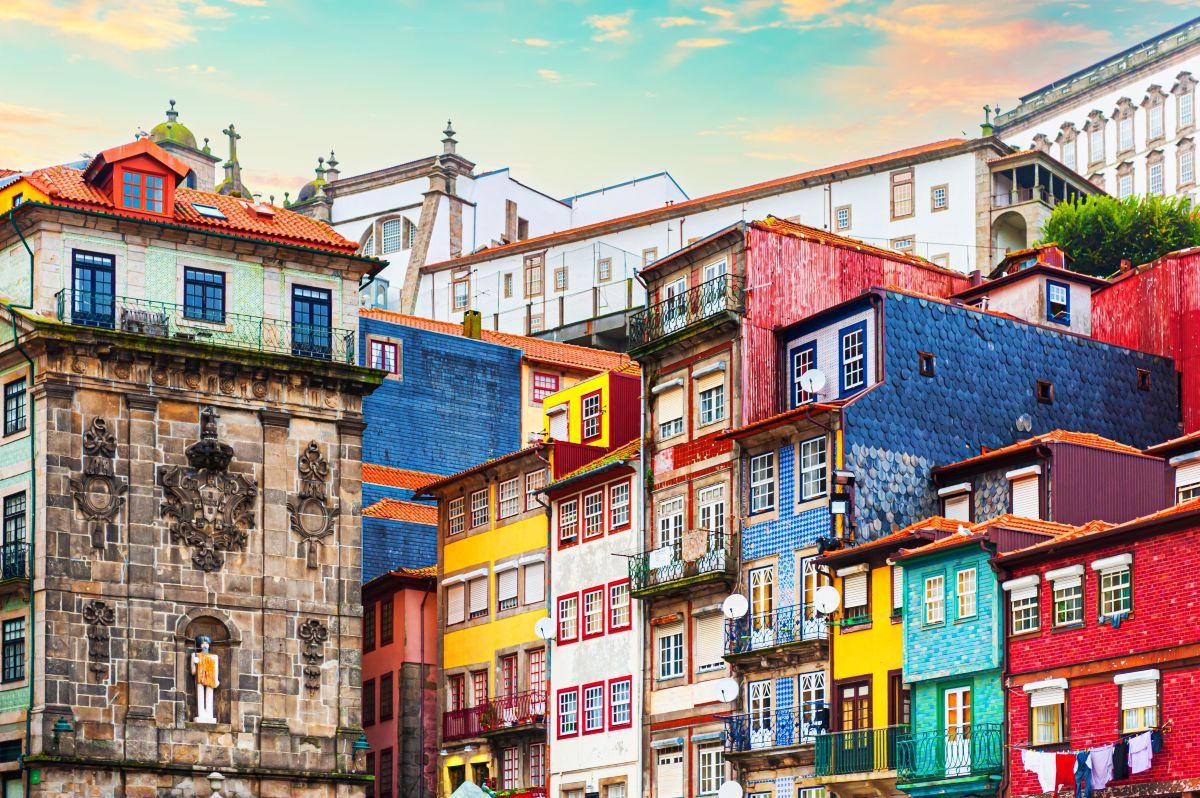
Porto is a city you don’t simply visit – you let it unfold around you. Between steep alleyways, azure-blue tiled façades, and the gently flowing Douro River, a cityscape emerges that feels rough, romantic, and wonderfully authentic all at once. Portugal’s second-largest city deliberately avoids polish and gloss, choosing instead history, enjoyment, and calmness. Anyone who explores Porto quickly realizes: this city doesn’t try to impress – it simply does.
Top Attractions in Porto
Ribeira District
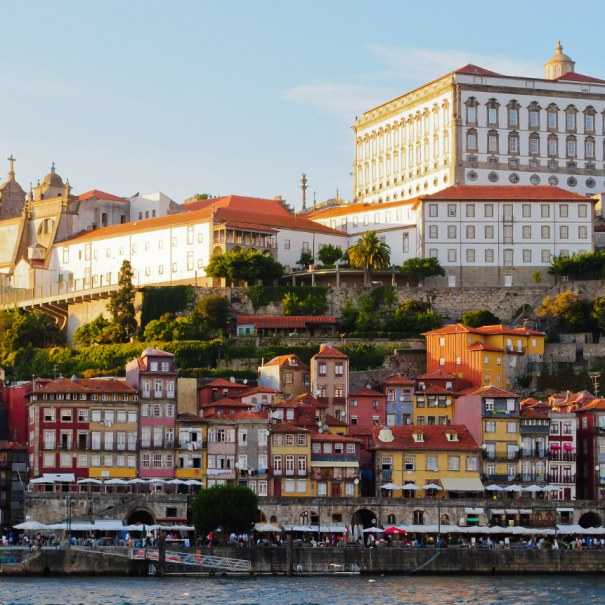
The heart of Porto beats in Ribeira – a picturesque district directly on the Douro, where colorful houses appear stacked on top of one another. Narrow streets, small bars, and laundry lines shape the authentic cityscape, which is a UNESCO World Heritage Site. During the day, Ribeira is lively and bustling; in the evening, it transforms into a romantic setting with lights reflecting on the water. A walk along the riverbank is an absolute must here.
Ponte Dom Luís I
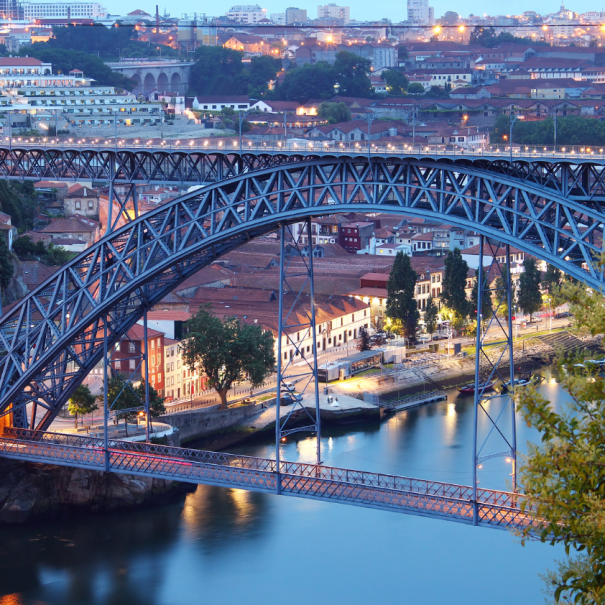
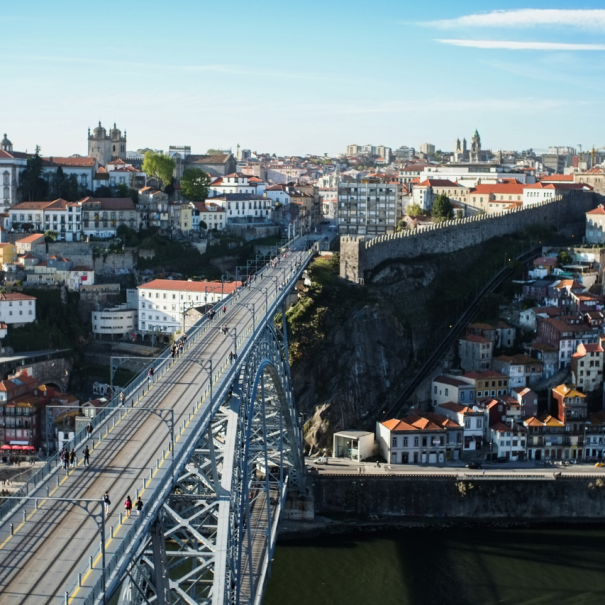
This iconic double-deck bridge connects Porto with Vila Nova de Gaia and is one of the city’s most famous landmarks. It was designed by a student of Gustave Eiffel – which explains its striking steel construction. The upper level is used by the metro and pedestrians, while the lower level accommodates cars and walkers – both offer spectacular views over the Douro.
Fun Fact: When it opened in 1886, the Ponte Dom Luís I was the longest steel arch bridge in the world. Today, it is above all one thing: a guaranteed reason to stop in awe right in the middle of your walk.
Livraria Lello
This legendary bookshop is considered one of the most beautiful in the world, and Porto would feel only half as literary without it. Founded in 1906, it impresses with its curved red staircase, intricately carved wooden shelves, and a richly decorated glass ceiling through which warm daylight pours in. Particularly striking is the Neo-Gothic interior, which uniquely combines literature and architecture. Despite the crowds, a visit is well worth it – hardly any other place in Porto conveys such a strong love for the written word.
Fun Fact: Livraria Lello regularly appears in rankings of the world’s most beautiful bookstores. To manage visitor numbers, entry now requires a ticket, though the fee is deducted if you purchase a book.

Sé do Porto Cathedral
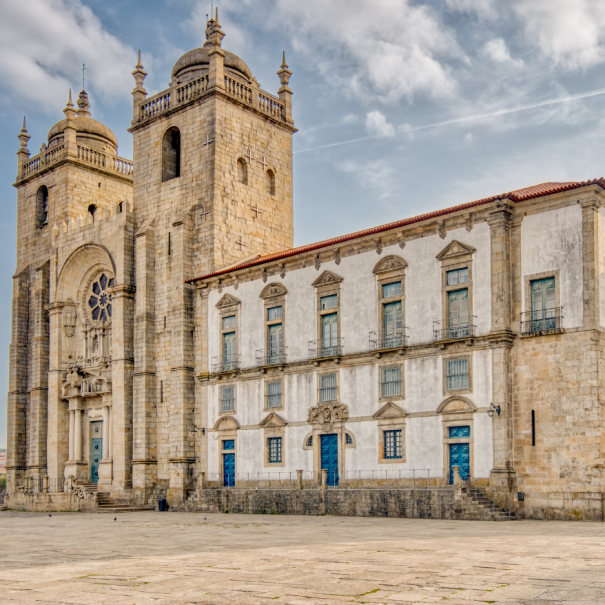
Towering high above the city stands the imposing Sé do Porto – a blend of Romanesque, Gothic, and Baroque styles. Its forecourt offers one of the most beautiful views over the old town and the Douro. Particularly worth seeing is the cloister with its blue-and-white azulejo tiles depicting biblical scenes. A place that breathes history while radiating calm.
São Bento Railway Station
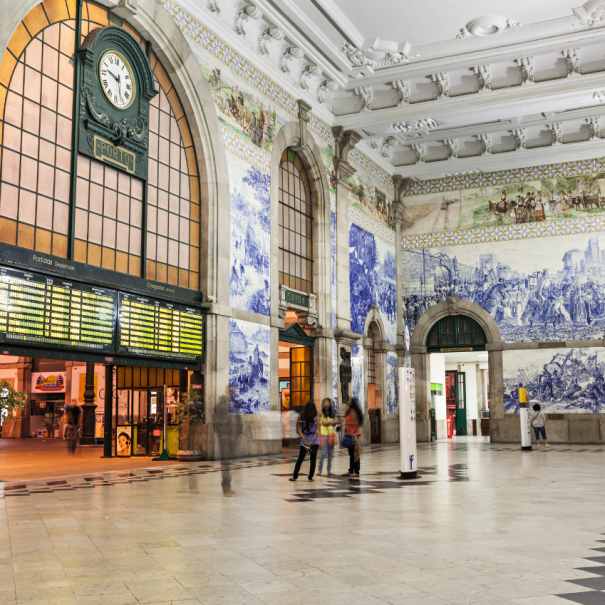
A railway station as a sightseeing highlight? In Porto, absolutely justified. The grand entrance hall is decorated with more than 20,000 hand-painted azulejo tiles, designed in the early 20th century by Jorge Colaço. They depict significant scenes from Portuguese history, including battles, royal weddings, and everyday rural life. The station was built on the ruins of a former Benedictine monastery, further emphasizing its historical character. Even without a train ticket, a visit is worthwhile – simply to experience history in passing.
Best Scenic Viewpoints
Miradouro da Serra do Pilar
Located on the Gaia side, this viewpoint offers breathtaking views of Porto, the Douro, and the Ponte Dom Luís I. Especially at sunset, the scene feels almost cinematic. The area is quiet, spacious, and perfect for a short break. Anyone wanting to understand Porto from above is in exactly the right place here.
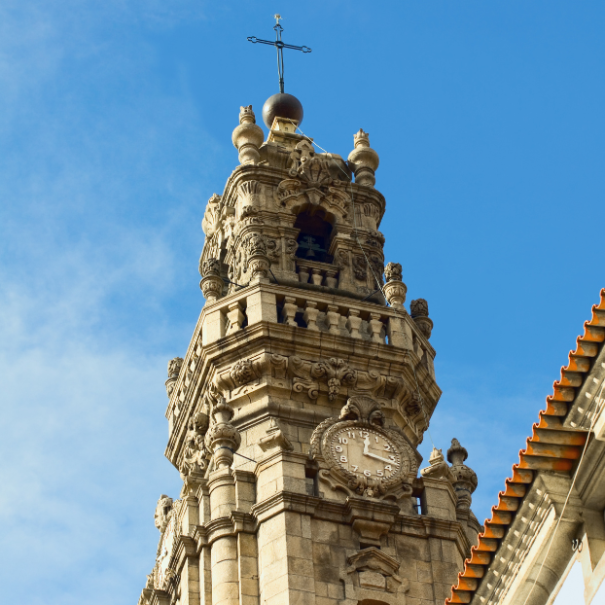
Torre dos Clérigos
The Torre dos Clérigos is one of Porto’s most famous landmarks and has shaped the city skyline since the 18th century. The 76-meter-high Baroque bell tower belongs to the Igreja dos Clérigos and was once the tallest structure in Portugal. The climb of 225 steps leads through narrow staircases and past historic bells before reaching the viewing platform. From the top, a sweeping panoramic view opens over the old town, the Douro, and on clear days all the way to the Atlantic. The tower serves not only as a viewpoint but also as an orientation point within the city.
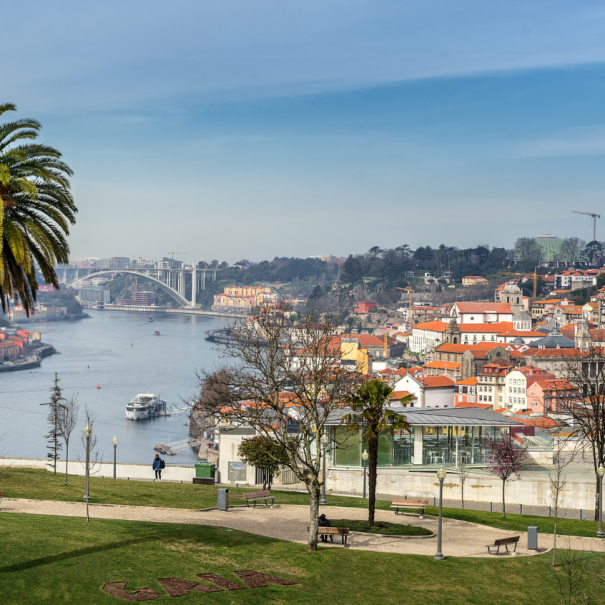
Jardim do Morro
A popular meeting place for locals, musicians, and sunset seekers. From here, you get a fantastic view of Porto’s old town with its tightly packed houses and church towers. Especially in the early evening, locals and visitors gather to enjoy the sunset together. The atmosphere is relaxed and informal, often accompanied by street music. The park is an ideal spot to experience Porto without any sense of rush.
Culinary Highlights For Food Lovers
Café Santiago
Café Santiago is considered one of Porto’s most traditional addresses for the famous Francesinha. Since the 1950s, this hearty dish has been served here in its classic form, without modern twists. The restaurant is simply furnished, often busy, and thrives on its authentic charm. For many locals, it is a regular go-to spot – a true mark of quality. Anyone wanting to get to know Porto’s everyday cuisine is in the right place here.

Casa Guedes
An unassuming place with cult status: Casa Guedes is a down-to-earth eatery known for its straightforward cuisine and relaxed atmosphere. Particularly popular are the sandwiches, prepared with high-quality ingredients. The small dining room is often lively, giving the place an almost family-like feel. Many guests come here deliberately; others stumble in by chance and stay longer than planned. A typical spot that shows just how enjoyable simplicity can be.
Restaurante DOP
Restaurante DOP represents modern Portuguese cuisine with a clear connection to tradition. Under the direction of Rui Paula, classic ingredients are reinterpreted without losing their roots. The stylish yet understated ambiance deliberately keeps the focus on the culinary experience. The dishes are based on seasonal products and regional influences. Ideal for anyone wanting to discover Porto on a more refined culinary level.
Insider Tips & Hidden Gems
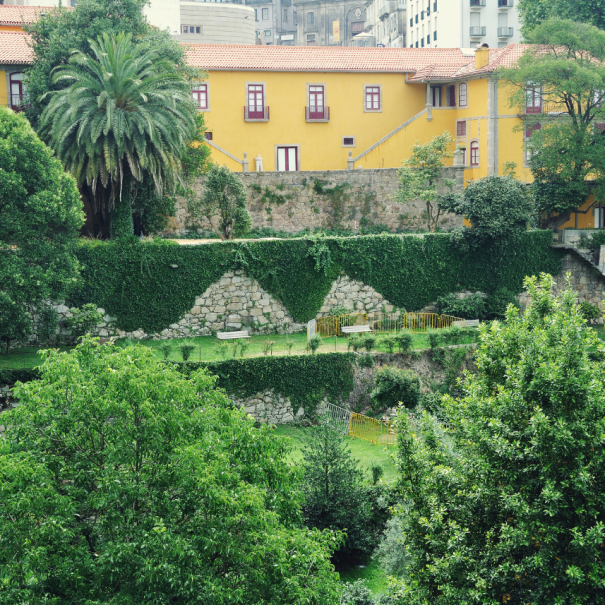
Jardim das Virtudes
Laid out in terraces, Jardim das Virtudes stretches from the upper city down toward the Douro, constantly opening up new perspectives of the river. Away from the main tourist routes, the garden is especially appreciated by locals looking for a break from the city bustle. In the late afternoon, a particularly relaxed atmosphere emerges as the light softens and Porto slowly winds down. An ideal place to experience the city from a calmer perspective.
Foz do Douro
Where the Douro flows into the Atlantic, Porto reveals its maritime side. Wide promenades, historic lighthouses, and open views of the sea define this district. The area is perfect for long coastal walks or a break filled with fresh sea air. Especially in changeable weather, it becomes clear how strongly the Atlantic influences the city’s climate and character. Foz do Douro offers a pleasant contrast to the dense old town.
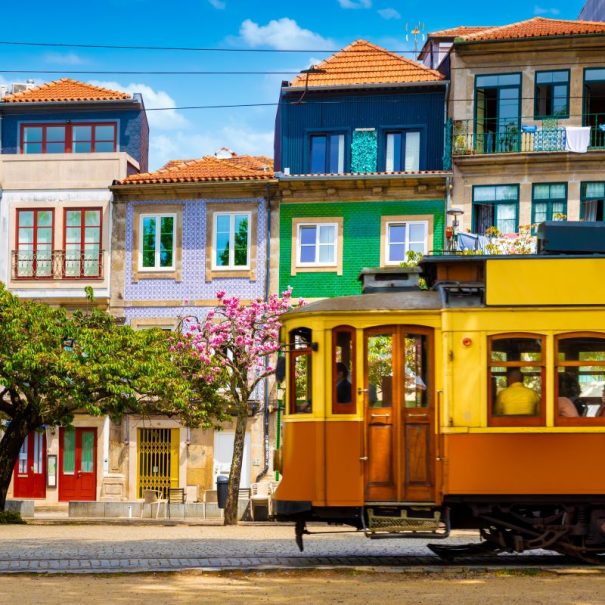
Fun Fact: Tram line 1 runs directly from the city center to Foz do Douro – one of the most beautiful tram rides in Europe, without any roller-coaster feeling.
Museums for Culture and History Enthusiasts
Museu de Serralves
The Museu de Serralves is considered the most important museum of contemporary art in Portugal. In addition to changing international exhibitions, the interaction between modern museum architecture, a historic villa, and an expansive park is particularly impressive. Art, nature, and design are deliberately intertwined here. The adjoining garden invites visitors to take leisurely walks and is part of the overall experience. Even visitors without a strong interest in art appreciate the open, tranquil atmosphere of the site.
World of Discoveries
An interactive museum that vividly tells the story of Portugal’s Age of Discoveries. Multimedia stations, themed rooms, and ship replicas make history tangible and easy to understand. The focus is less on classic exhibits and more on experiencing connections. This makes the museum especially suitable for visitors who want to explore history in a modern format.
Museu do Vinho do Porto
If you say Porto, you must also say port wine. The Museu do Vinho do Porto offers a well-founded overview of the history and significance of port wine for the city. The exhibition clearly explains cultivation, trade, and the wine’s international distribution. The close connection between Porto, the Douro, and wine tradition becomes particularly evident. Thanks to its riverside location, the museum visit blends seamlessly into the cityscape. Ideal as an introduction before diving deeper into the topic of port wine.
Discover 70+ cities worldwide with professional audio guides – and counting! Thanks to integrated navigation, you’ll easily find your way, even without an internet connection. Whether it’s famous highlights or hidden gems – Plazes brings exciting tours and vivid stories straight to your smartphone. Completely free and no registration required. Download now and get started!


Shopping & Souvenirs
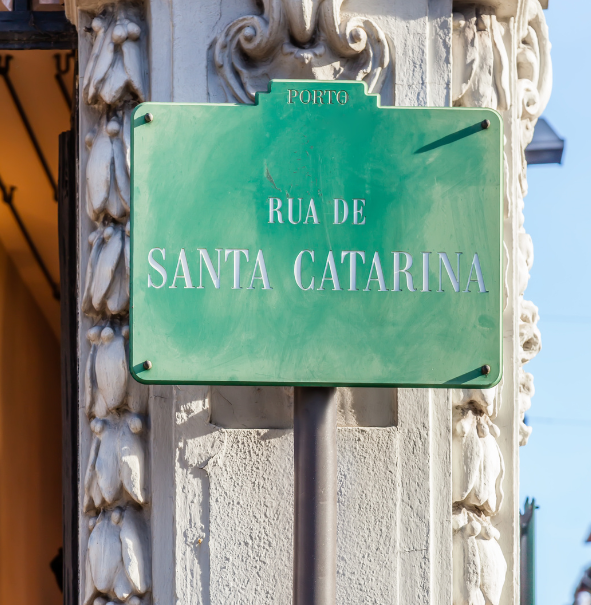
Shopping in Porto is pleasantly manageable and strongly shaped by local products. Along Rua de Santa Catarina, you’ll find well-known international brands, while the old town is home to many small shops offering handcrafted goods. Cork products, traditional ceramics, and artistically designed azulejos are especially popular. Port wine also makes an excellent souvenir, provided it is packed securely. Porto focuses less on large shopping malls and more on individuality and craftsmanship.
Tips for Cruise Passengers
Cruise ships usually dock at the port of Leixões, about seven kilometers from the city center. From there, taxis, shuttle buses, or the metro provide easy access to downtown Porto. The city is compact but hilly, so comfortable shoes are recommended. If time is limited, it’s best to focus on Ribeira, São Bento Station, and the Sé Cathedral, as these attractions are relatively close to each other.
Tips for Solo Travelers
Porto is considered a safe and open city and is ideal for solo travelers. The public transport network is well developed and easy to navigate, and many routes can also be covered on foot. The central tourist information office at Praça da Liberdade offers helpful guidance. Cafés, viewpoints, and parks invite visitors to enjoy the city alone at a relaxed pace. The calm, friendly atmosphere makes Porto particularly accessible.
Conclusion
Porto captivates with authenticity, history, and a pleasantly unhurried atmosphere. The city combines impressive architecture with culinary tradition, green retreats, and vibrant neighborhoods. Whether strolling along the Douro, taking in the view from a bridge, or visiting a museum – Porto reveals its charm without grand staging. It is precisely this restraint that makes the city so special and ensures it lingers in memory for a long time.
FAQs:
1. How much time should you plan for a visit to Porto?
For the main attractions such as the Ribeira Old Town, the Dom Luís I Bridge, and a port wine tasting, two days are sufficient. Anyone who also wants to visit museums, stroll through different neighborhoods, or take a trip to the Douro Valley should plan three to four days.
2. Which neighborhoods are worth exploring beyond Ribeira?
The Cedofeita district is known for its galleries, small shops, and a young, creative cultural scene. Foz do Douro connects the city with the Atlantic through elegant promenades and beaches. Miragaia also offers an authentic atmosphere, with far less bustle than the touristy Ribeira district.
3. Do you need a reservation to visit port wine cellars in Vila Nova de Gaia?
For classic guided tours with tastings, making a reservation in advance is recommended, especially during the high season. Spontaneous visits are sometimes possible; however, waiting times may occur or time slots may already be fully booked. Anyone who specifically wants to visit a particular wine cellar should book in advance.
4. When is the best time to travel to Porto?
Spring (April to June) and autumn (September and October) are considered ideal, as temperatures are pleasant and there are fewer visitors. Summer is also an attractive time to visit Porto, though it is busier and warmer. Winter is mild but can be rainy.
5. What is the best way to get around Porto?
The historic old town is best explored on foot, though the many hills should be taken into account. For longer distances, the metro, buses, or the historic tram are a good option. A car is usually impractical in the city center, as the streets are narrow and parking spaces are scarce.